Commercial mosquito screens in Dubai that keep the bugs out of business
Heavy-duty insect screening for restaurants, hotels, warehouses, offices and clinics — fitted to the doors, windows and large openings of a premises so flies, mosquitoes and dust stay outside while the place stays open, ventilated and trading. Built for constant commercial use and fitted around your hours.
kitchens, hotels, warehouses, offices
built for constant commercial use
fitted around your opening hours
premises screened from our Al Qusais base
See our commercial installs in action
Short clips from real sites — a self-closing screen on a busy kitchen door, a wide screen across a loading bay still working to deliveries, and a screened café frontage open to the street but closed to flies.
What are commercial mosquito screens — and why Dubai businesses need them
Commercial mosquito screens are insect screens made for business premises rather than homes — fitted to the doors, windows and large openings of restaurants, hotels, warehouses, offices and other workplaces so flying insects stay outside while the place stays open and ventilated. The job is the same as a domestic screen, but the build is heavier, the openings are bigger and more varied, and the screens have to survive constant daily use.
For a lot of Dubai businesses, keeping insects out is not a comfort but a requirement. In a kitchen, a café or any food premises, flies on food or near a prep surface are a hygiene failure, and screening the openings is one of the simplest ways to keep them out and to show inspectors that the risk is controlled. Hotels, clinics and schools have the same need for different reasons — guests, patients and children all expect a space free of flying insects. A screen at every opening lets a premises bring in fresh air and keep doors open for trade without inviting the problem in.
The other difference is wear. A restaurant kitchen door might open hundreds of times a shift; a warehouse bay stands open all day to forklifts and deliveries. A domestic screen would not last a week in that. Commercial screens are built around the traffic — heavier frames, tougher mesh, hardware rated for constant cycling — so they keep working through the kind of use that a workplace puts them under.
Screening also takes pressure off everything else. The more flies you keep out at the opening, the less you rely on sprays, baits and electric fly-killers inside — which matters most exactly where chemicals are least welcome, around food and people. And the insects in question are not only a nuisance: mosquitoes are tied by the World Health Organization to a large global burden of vector-borne diseases, so excluding them from a workplace protects staff and customers alike, not just the food.
What works for a business is screening the whole premises as one job, matched to how each opening is used — a self-closing screen on the busy kitchen door, a powered or wide screen on the loading bay, fixed panels on the office windows — all surveyed and fitted together. Done that way, commercial mosquito screens are one clear, lasting part of a premises’ insect control, working alongside good cleaning and waste handling rather than replacing them.
- Heavy-duty builds for high-traffic doors, bays and windows
- Keep flies off food and out of clean, customer-facing areas
- One survey, one schedule and one quote for the whole site
- Fitted around trading hours to keep downtime to a minimum
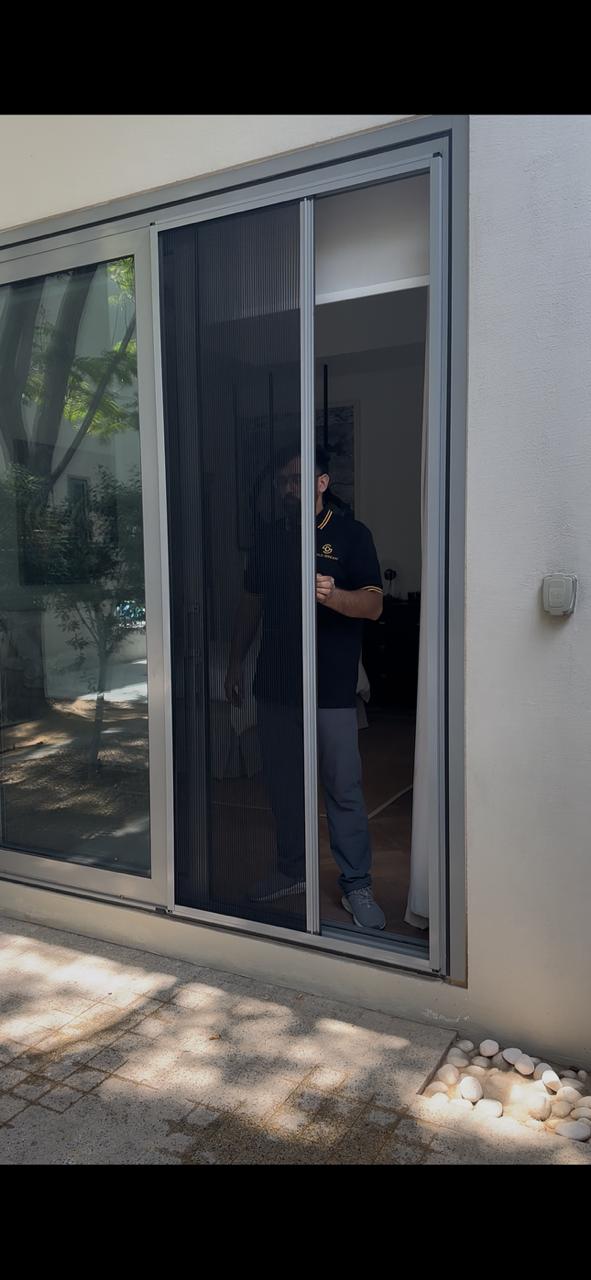
Open for trade, closed to insects
Our commercial mosquito screens are built so a business can run with its doors and windows open — air moving through the kitchen, the shopfront open to the street, the loading bay working — without flies, mosquitoes and dust coming in with the trade. The screens take the daily traffic and keep doing their job shift after shift.
Each screen is sized to its opening and finished to suit the building, whether that is a smart café frontage or a plain warehouse wall. See more of our recent work, and the made-to-measure window screens we fit across commercial and residential sites alike.
We screen the openings most exposed to insects first — kitchen and service doors, dining terraces, delivery bays, ground-floor windows — in finishes that match the premises, with hardware chosen for how hard each opening is worked.
Industries we screen across Dubai
Almost any premises with an opening to the outside benefits from screening, but some need it more than most. These are the sectors we fit commercial mosquito screens for most often.
Restaurants, cafés & kitchens
Self-closing screens on kitchen and service doors, plus dining terraces, to keep flies away from food and meet hygiene expectations.
Door screens →Hotels & hospitality
Guest-room windows, lobbies, restaurants and pool areas screened so guests get fresh air without the insects.
Window screens →Warehouses & logistics
Powered and wide screens for loading bays and large roller-door openings that have to stay open to traffic all day.
Motorized screens →Offices & retail
Shopfronts, atriums and office windows screened for staff comfort and to keep a clean, professional space.
Fixed screens →Clinics, schools & nurseries
Hygiene-sensitive settings where a fine, durable mesh keeps flying insects away from patients, children and clean areas.
Mesh types →Staff accommodation & compounds
Multi-unit residential blocks and labour accommodation screened building by building, in one managed project.
Block & villa screening →Whatever the sector, we survey the whole site, match a screen to each opening and fit it to take the use it will get — not a one-size install, but the right screen in the right place across the premises. For an operator with several branches, we can hold one agreed specification for commercial mosquito screens and roll it out site by site, so every location is screened to the same standard.
Heavy-duty builds, mesh and finishes
What makes a screen commercial is the build. The frames carrying our commercial mosquito screens are heavier-gauge aluminium, the corners and hinges are rated for constant cycling, and the mesh is chosen for the setting — a tougher weave where trolleys and people brush past, a finer one around food and clean areas, and a pest-tough grade for accommodation.
Because commercial openings vary so much, so do the screens: self-closing door curtains and hinged screen doors for entrances, sliding and retractable screens for serveries and terraces, powered or wide flat screens for bays and tall spans, and fixed panels for anything that never opens. Each is fixed to the structure to take the load, not just clipped to a frame. You can compare each option, side by side, in our mosquito mesh types guide.
Finishes are matched to the premises — powder-coated white, black, grey or a custom colour to suit a frontage or blend into a back-of-house wall — so the screening looks deliberate on a customer-facing façade and simply practical where it is out of sight.
Commercial build
Frames:
Heavy-gauge Constant-cycle hardwareMesh grade:
Standard Fine Pest-toughOpenings:
Doors Bays Windows TerracesFrame colour:
White Black Grey CustomHow much do commercial mosquito screens cost in Dubai?
We price commercial screening opening by opening and add it up for the whole site, so the total reflects how many openings a premises has, their sizes and the screen each one calls for. A handful of window screens for an office is a small job; screening a whole hotel or a warehouse full of bays is a much larger one. The figures below are a guide; we quote firm after a site survey.
| Screen / scope | Typical opening | From (AED) |
|---|---|---|
| Window / panel screen | An office or guest-room window | 300 |
| Self-closing door screen | A kitchen or service door | 750 |
| Sliding / retractable screen | A servery, terrace or wide door | 1,500 |
| Loading-bay / large opening | A roller door or tall span | 3,000 |
| Whole-premises package | A full restaurant, floor or site | 8,000 |
A handful of things move the figure, and we go through each at the survey:
- Number of openings — the count across the site is the biggest driver of the total.
- Opening size — a bay or double-height atrium calls for much heavier framing and a far bigger run of mesh than one window.
- Screen type — fixed panels sit at the bottom, with self-closing, sliding and powered units priced above them.
- Mesh grade — a tougher or finer weave for a particular area adds a little.
- Access and hours — fitting out of trading hours or at height can affect the labour.
The only firm figure comes from a site visit. Our surveyor walks the premises, notes what each opening needs and how it is used, and returns an itemised written quote for your commercial mosquito screens, with no obligation and clear line items for budgeting or sign-off.
Against the cost of a failed hygiene inspection, a kitchen overrun with flies, or guests and staff swatting at their desks, screening is a modest, one-off spend that pays back every day the premises trades. Most operators treat it as basic infrastructure — fitted once, working quietly in the background, and far cheaper than the problems it prevents. Either way, commercial mosquito screens are a one-time fit-out cost rather than an ongoing one, and they keep earning that back every trading day.
Insect screens or air curtains?
At a busy commercial entrance there are two common ways to keep flying insects out: a physical insect screen or an air curtain that blows a stream of air across the opening. They work differently, and plenty of premises use both.
Insect screen
A physical mesh barrier that simply blocks insects from passing. It works whether or not anything is switched on, costs nothing to run, and keeps out dust as well — though a door screen has to be opened to walk or wheel through, or be self-closing.
Air curtain
A fan unit over the door that pushes a sheet of air down across the opening. It leaves the doorway physically clear for constant trolley and foot traffic, but it does not stop every insect, runs on power all day, and does nothing once it is off.
For an opening that must stay completely open — a busy trolley route — an air curtain earns its place, often alongside a sliding screen that closes after hours. For a loading bay or a wide span, a wide flat screen blocks insects outright. We will advise which suits each opening, or how to combine them.
A pest-free premises depends on more than screening alone. Alongside clean waste handling and routine pest management — the kind Dubai Municipality expects of food businesses — insect screens cut off the simplest way in, so far fewer flies reach the inside to begin with.
More from our screen range:
Retractable screens
Roll-away screens for serveries, terraces and windows that need to clear completely.
Explore →Pleated screens
Folding screens for wide premises openings where airflow matters.
Explore →Magnetic screens
Hands-free self-closing curtains for busy kitchen and service doors.
Explore →Wide plain mesh
Wide flat screens for loading bays and spans a single panel cannot cover.
Explore →Stainless security screens
Stainless screens where a premises needs security and insect protection together.
Explore →Sliding screens
Sliding panels for shopfronts, serveries and patio doors on commercial sites.
Explore →Areas we cover
Commercial screening fitted across Dubai and the wider Emirates.
Explore →One survey, one schedule, one invoice
Screening a premises is a project, so we run it as one. A surveyor walks the whole site, agrees the screen for each opening and the finish, and we make every unit to its own measurements — then schedule the fit around your trading, working out of hours or in phases where a kitchen or shopfront cannot stop. Cut to the opening rather than to a stock size, it fits the reveal exactly and seals cleanly.
You get one point of contact, one schedule and one itemised invoice for the site, with the work backed by our warranty and aftercare for the moving parts. Wondering who would actually carry out the work? Get to know the company, then browse everything we make — from one screen to an entire premises.
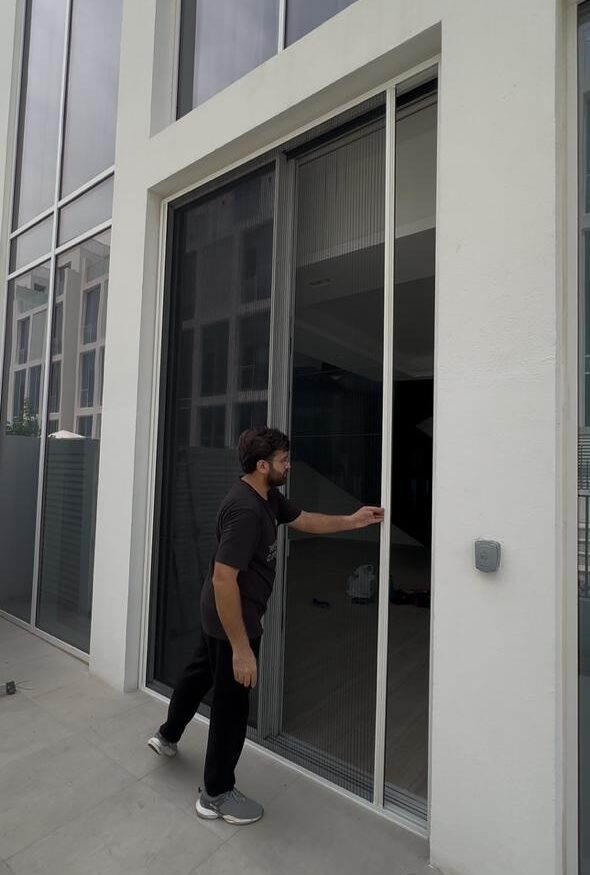
Why Dubai businesses choose Mosquito Net Pro
Businesses come back to us because we treat commercial mosquito screens as working infrastructure, not a one-off supply — surveyed properly, built for the traffic, fitted to the structure, and backed after the job. We make the screens in our own workshop and fit them with our own team, so the quote, the build and the install are all answerable to one company.
We are equally honest about the limits of what a screen can do. It is the most effective way to keep flying insects out at the opening, but it works as part of a premises’ pest management, not instead of cleaning, waste control and routine treatment. And on fire doors and escape routes we fit screens that meet egress requirements — nothing we install should ever slow an exit.
What operators value most is a job that does not get in the way of trade. The survey is quick, the screens are made before we arrive, and the fit is worked around opening hours so a kitchen, shopfront or floor keeps running. Done once and properly, the screening then largely looks after itself. Do three quick checks first: who you would be dealing with, commercial work we have done, and what clients say.
Dependable and rarely needing attention, commercial mosquito screens are the kind of low-fuss upgrade that simply makes a premises better to run — which is why operators who screen one site tend to bring us back for the next.
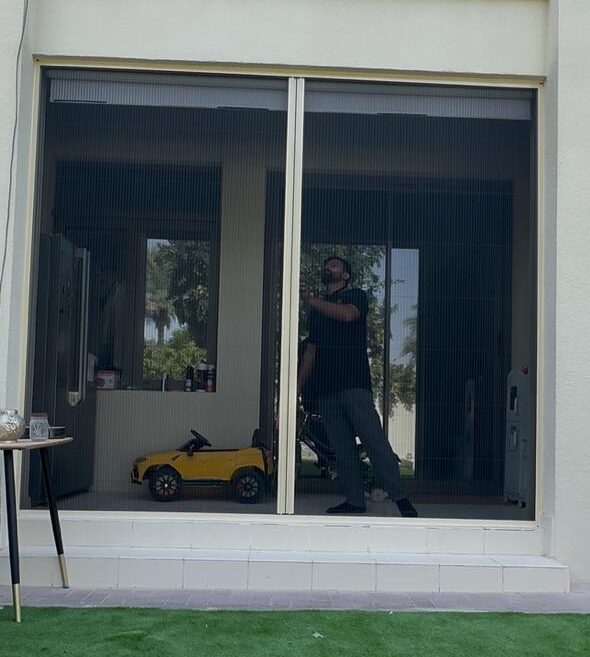
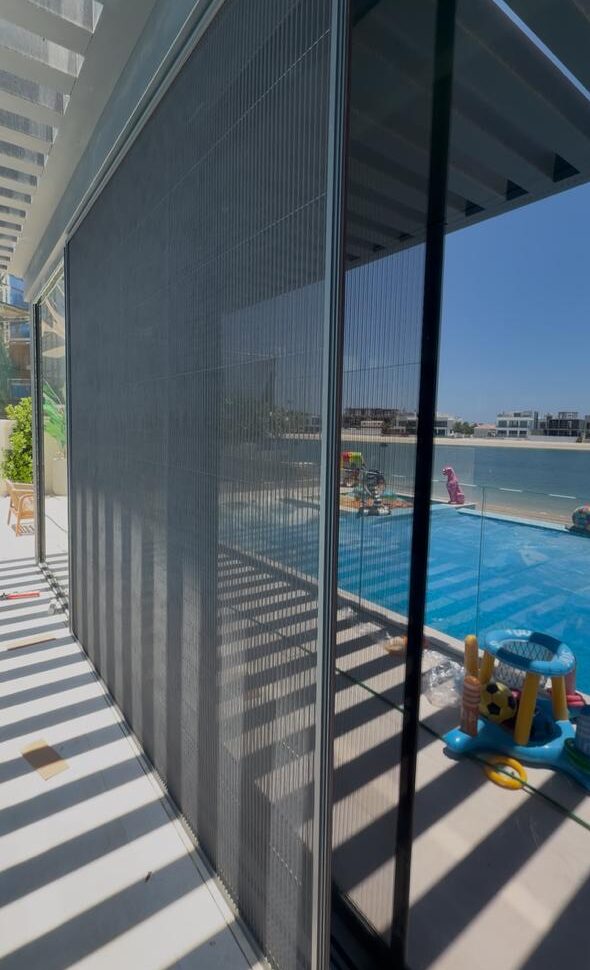
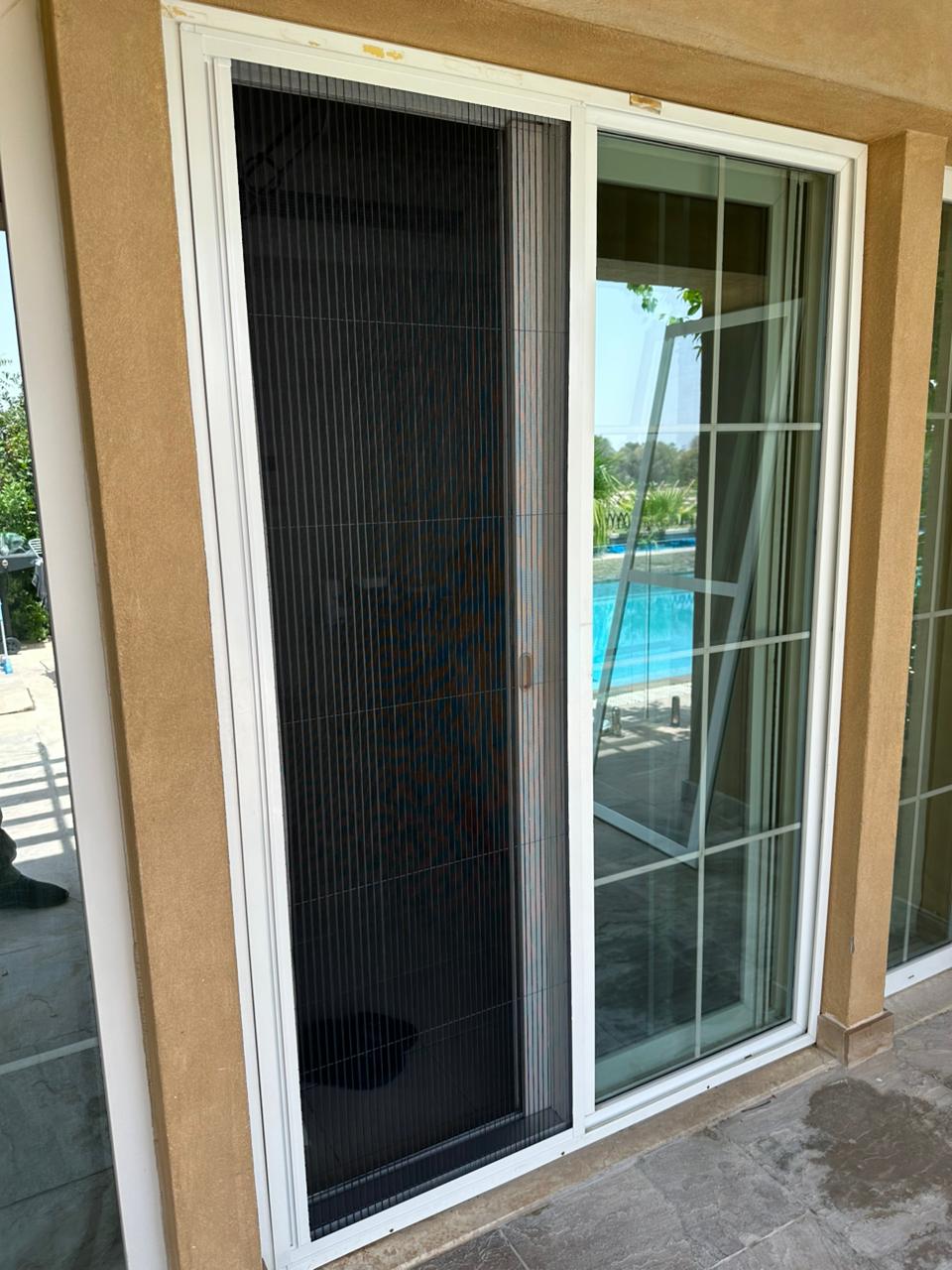
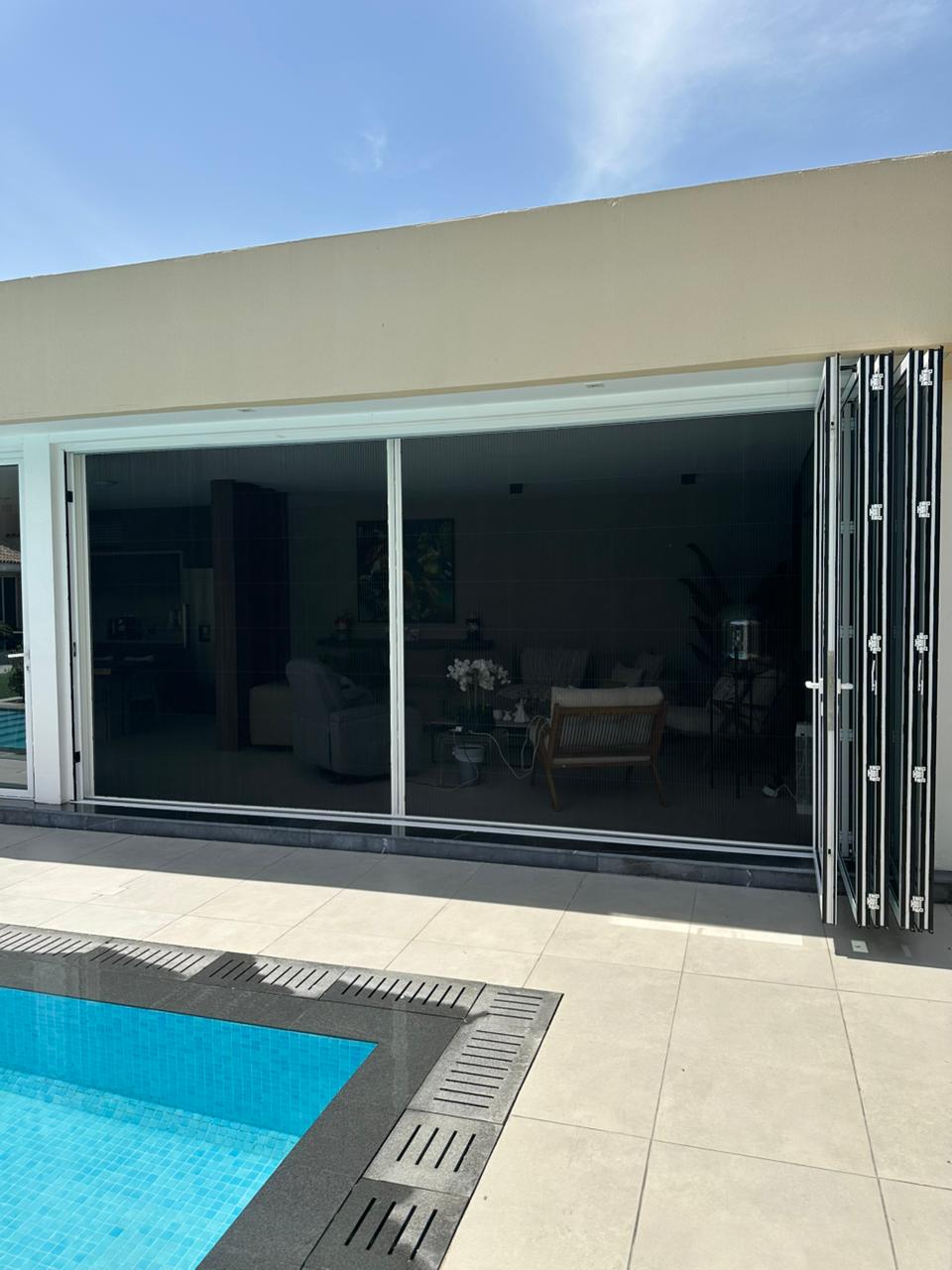
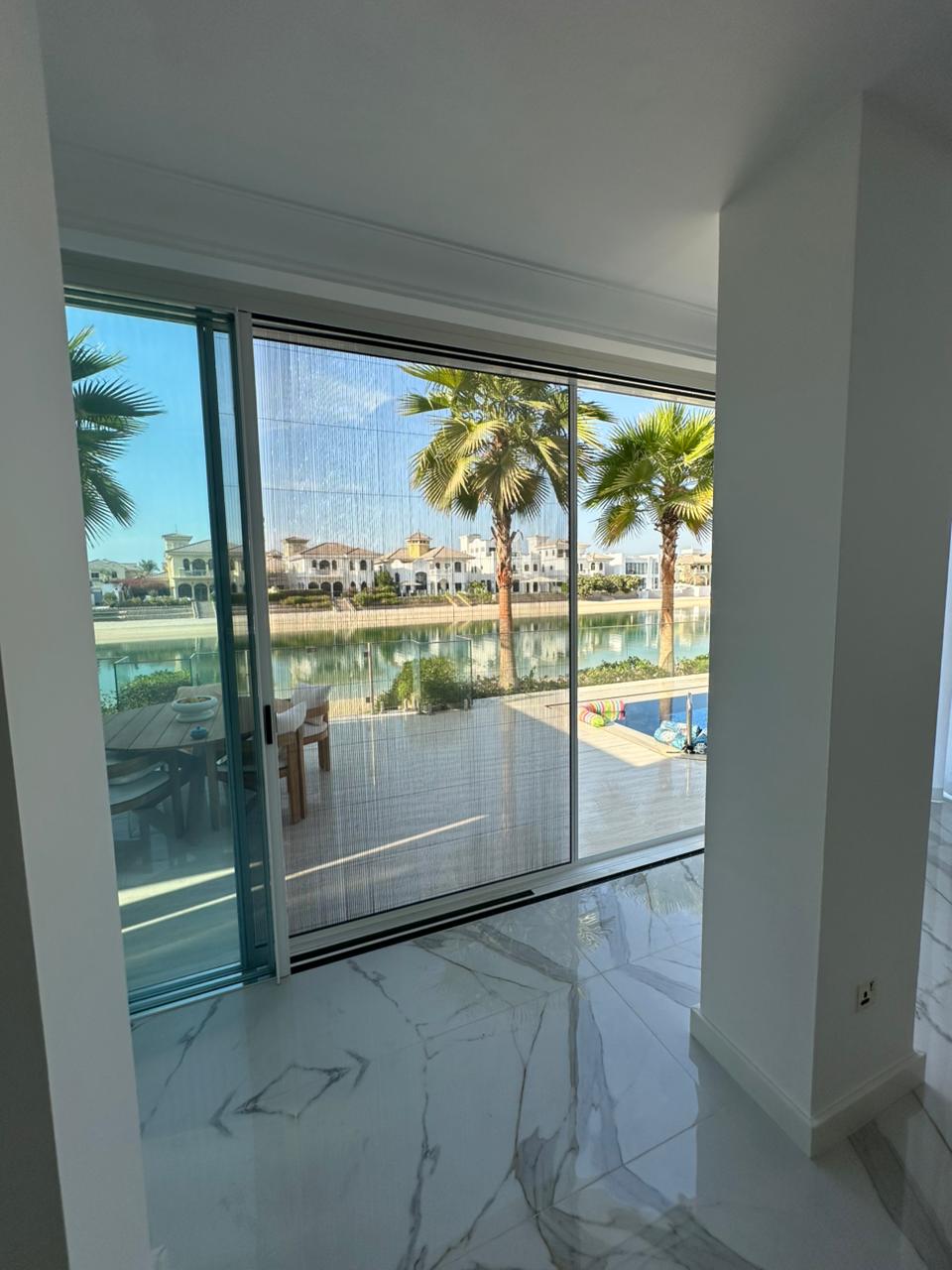
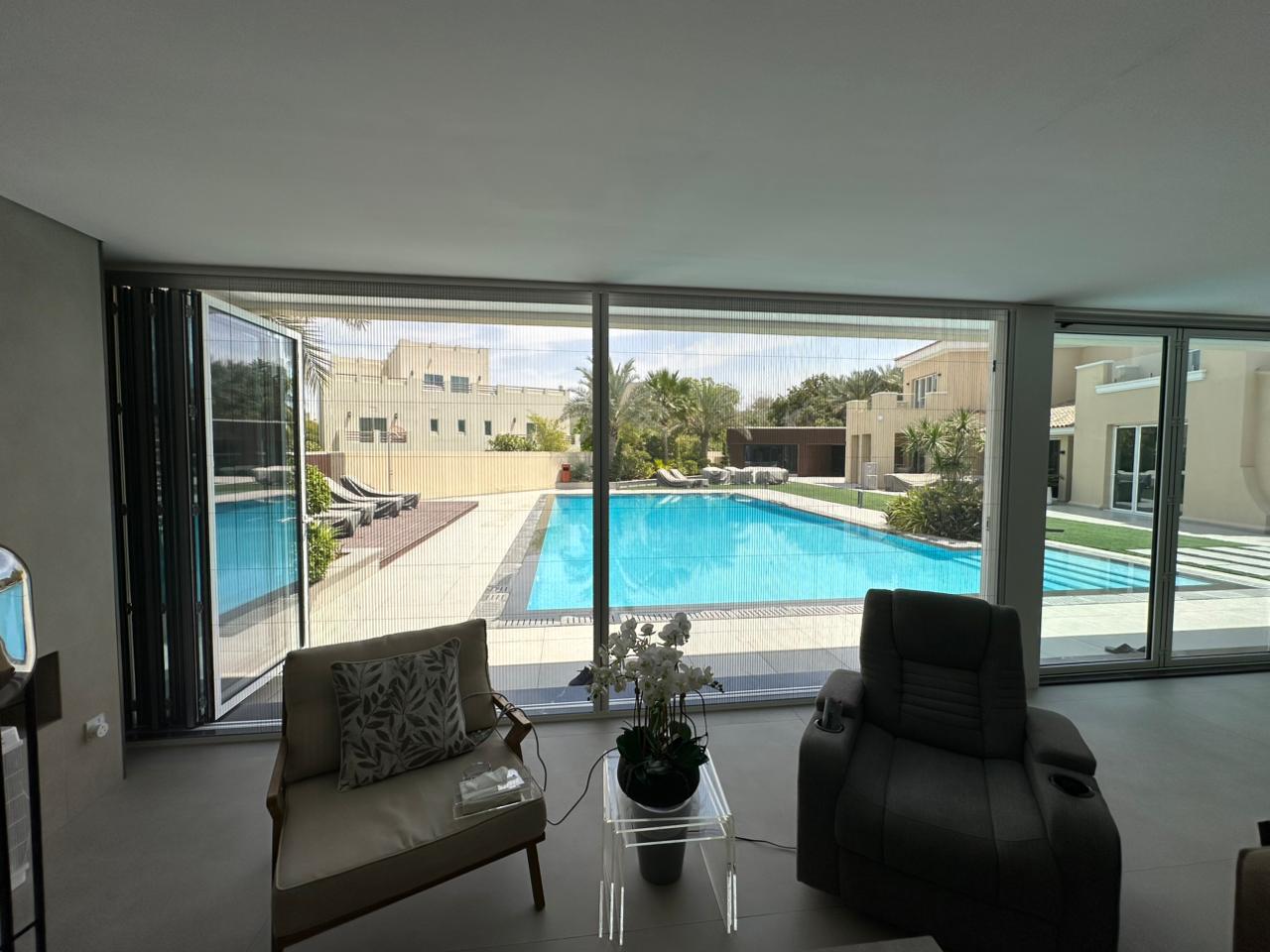
Commercial premises we have recently screened
A handful of recent jobs, from kitchens and cafés to warehouses and offices. We have yet to finish photographing our latest commercial jobs, so the pictures here fill in until then.
How a commercial screening job runs
Survey
We tour the site, measure each opening and record how it is used and worked.
Quote
You get one itemised written quote, line by line, for sign-off or budgeting.
Make
Every screen is built to its opening in heavier commercial spec at our workshop.
Fit
We install around your hours, out of trading time or in phases where needed.
Commercial screening across Dubai and beyond
From our Al Qusais base we screen commercial premises right across Dubai and the wider Emirates — restaurants and hotels in the city, warehouses and logistics sites in the industrial areas, offices and clinics in the business districts, and accommodation compounds further out toward Abu Dhabi. Wherever the site is, we match the screens and the schedule to how it trades.
Commercial screening FAQs
Do commercial mosquito screens help with food hygiene compliance?
Are commercial screens tough enough for a busy kitchen or warehouse?
Can you screen large loading-bay or roller-door openings?
Will fitting disrupt our trading hours?
Do screens replace pest control and fly-killers?
Are screens allowed on fire doors and emergency exits?
Do you offer maintenance and aftercare for commercial sites?
How much do commercial mosquito screens cost in Dubai?
Tell us about the premises and we will take it from there — survey every opening, recommend the right screen for each, and send one itemised written quote for the site, with no obligation.
No obligation · Free site survey · Itemised written quote