Retractable mosquito nets and roll-up mesh in Dubai
Draw the mesh sideways — to the left, to the right, or meeting in the middle — or roll it down from the top, then let the spring wind it out of sight. Spring-loaded roller screens that protect your rooms without changing the look of your windows and doors.
slim cassette tucks the mesh away
batteries, refills or sprays needed
typical install window after measuring
measured & installed Emirates-wide
See our retractable screens in action
Short clips of roller screens being drawn across, gliding back into the cassette, and finished on real Dubai openings.
What are retractable mosquito screens?
A retractable mosquito screen is a flat insect mesh wound onto a spring-tensioned roller inside a slim aluminium cassette, mounted at the side of your opening or above it. Depending on the opening, the sheet can draw sideways to the left, sideways to the right, or split from the centre so two halves meet in the middle — or roll straight down from a cassette at the top. A quiet friction brake holds it wherever you stop, and when you release it the spring rewinds the mesh smoothly out of sight. The upshot is insect protection that simply is not there when you do not want it — no panel on permanent show, no folded stack left at the side.
That disappearing act is the whole appeal. Across Dubai and the wider UAE, mosquitoes are treated as a year-round public-health pest and dengue is present, which makes keeping windows open without insects a real concern rather than a minor comfort; the World Health Organization notes that mosquitoes are the best-known disease vectors of all, behind illnesses such as a long list of vector-borne diseases. A roller screen lets you ventilate freely and still keep biting insects on the outside.
In a city where the air conditioning runs for much of the year, a roller screen also changes how a home feels day to day. Instead of keeping every window sealed and the cooling working overtime, you can open up on cooler evenings and pleasant winter days, let the air move through, and still keep the room insect-free. When the heat returns you simply let the mesh wind away and close up — the screen never gets in the way of how you already use the space.
- Retracts left, right, from the centre or upward — nothing on view when parked
- Side channels keep the sheet tight and straight, edge to edge
- Hand-operated by a bar, a pull cord or a chain, with no power required
- Powder-coated aluminium finished to match your existing frames
How a spring-loaded roller screen works
Inside every cassette is a hollow drum with a flat coiled spring at one end. When the mesh is parked, that spring sits relaxed and the sheet is fully wound on. As you pull the leading bar out, the sheet unwinds and the spring loads up, ready to draw it back. A small dampening brake stops the screen snapping shut, so a gentle release lets it travel home at a controlled, quiet pace rather than slamming into the housing.
The cassette can sit at the side, so the screen travels horizontally, or at the top, so it rolls down vertically — the same spring drum works either way. The leading bar runs captive inside guide channels that keep the mesh flat and stop it bowing in a draught. On a wide opening we fit two cassettes that draw in from the left and the right and meet in the centre, while on tall doors a chain or cord gives mechanical advantage so the pull stays light. Every part is chosen for the span it has to cover, which is exactly why a quick on-site measure beats guessing from a tape reading sent over the phone.
Because the action is controlled rather than sprung shut, roller screens are calm to live with: there is no loud snap, no trailing cord to tangle, and nothing for a child to catch. The same brake that softens the rewind also lets you park the mesh part-way down when you only want to screen the open section of a tilt-turn window. It is a small mechanism, but matching the spring tension and brake to the size of the sheet is the difference between a screen that glides for years and one that fights you.
Retractable vs pleated, sliding and fixed screens
Every system has a sweet spot. Here is how a roller screen lines up against the other ways to keep insects out.
Retractable roller screen
A flat sheet on a spring roller that hides completely in its cassette when parked. Best where you want the screen gone the moment you stop using it — everyday windows, single doors and tidy balcony openings that you open and close often.
Pleated folding screen
Mesh that gathers into a slim concertina and stacks to one side rather than rolling up. It steps over wide and bi-fold openings with a soft, guided glide. Read more on our pleated mosquito screens page to see where it wins.
For sliding windows and patio doors that already run on a track, a purpose-built sliding screen is often the simplest match, while a permanently mounted fixed-frame screen is the most affordable choice for a window you rarely touch. A roller screen sits between them: it disappears like nothing fixed can, yet needs no parking space at the side. Tell us how each opening is used and we will steer you to the right one.
Which roller screen suits which opening?
The honest answer is that it comes down to three things: the size of the opening, how often you pass through it, and your budget. A bedroom or living-room window that you crack open in the evening is the textbook case for a vertical roller — quick to draw, quick to forget. A single door to a yard or garden suits a side-pull roller you can latch and walk through. Wide patio and balcony spans are better served by a twin unit that meets in the middle, and tall villa doors by a chain-operated drop that keeps the pull light all the way down.
There is a real health reason to get this right rather than simply leave windows shut. Dengue is present in the UAE and tends to rise after wet spells, and it is spread by Aedes mosquitoes that bite during the day, so an opening you can ventilate freely — without inviting insects in — is worth more here than in a cooler climate. If you are weighing a roller against a folding screen for a very wide run, our team will say so plainly at the survey rather than push the cassette where it does not belong.
Roller and cassette systems we build
One mechanism, several formats. Each is cut and assembled to your opening, then matched to the right place in your home.
Every one of these is the same idea underneath — a spring roller in a slim cassette — configured for a different shape of opening. That is what lets a single workshop screen a small bathroom window and a tall terrace door in the same brand of hardware and the same powder-coat colour. Pick the format that matches the opening below, and we will confirm the exact size and fixing at the survey.
Roll-up window screens
Top-mounted cassette that rolls straight down by a bar and rewinds itself, sized for casement and tilt-turn windows in bedrooms, living rooms and kitchens.
Window screens →Side-retracting door screens
A side cassette that draws the mesh horizontally across a single doorway — to the left or the right — and latches shut, then rolls back into the jamb when you walk through.
Door screens →Centre-meeting twin screens
Two cassettes that draw in half from the left and half from the right, clipping in the middle — for wide balcony and patio openings, with no single oversized pull.
Balcony screens →Chain-operated tall rollers
A bead chain gives easy control on taller villa doors and double-height windows, keeping the pull light even on a long drop of mesh.
Villa screens →Motorized roller screens
The same cassette driven by a quiet tubular motor on a remote or wall switch — ideal for high or hard-to-reach openings you would rather not pull by hand.
Explore motorized →Very wide spans? Plain mesh
When an opening is too large for a spring roller to stay tight, a hand-drawn plain-mesh screen on a track is the better tool — up to several metres tall and wide.
Compare plain mesh →Sizes, spans and what each suits
Indicative guide for planning. Exact spans and the right cassette are confirmed at your free measurement.
| System | Typical opening | Operation | From (AED) |
|---|---|---|---|
| Roll-up window screen | Standard windows to ~1.6 m wide | Pull down, self-rewind | 250 |
| Side-retract door screen | Single doorways to ~1.2 m wide | Pull left or right + latch | 450 |
| Centre-meeting twin | Patio & balcony to ~3.6 m wide | Half left + half right, catch | 900 |
| Chain-operated tall | Doors & tall windows to ~3 m high | Bead chain | 700 |
| Motorized roller | High or wide openings | Remote / wall switch | 1,500 |
Mesh weaves, cassette colours and smooth operation
The mesh is the part that actually does the work, so it is worth choosing well. A standard fibreglass weave gives the best balance of airflow and insect protection for most homes; a finer weave catches smaller flies and more of the fine dust that drifts in on a shamal; and a tougher pet-resistant grade stands up to cats and dogs that lean on the sheet. We talk you through the trade-offs and bring samples so you can feel the difference between them.
For the cassette and channels, powder-coating means you are not stuck with silver. White, black, grey, beige or a custom colour all blend the housing into your window frames so the screen reads as part of the joinery, not a bolt-on. If you would like to see the full weave options side by side, our mosquito mesh types guide lays them out in detail.
Whatever combination you choose, day-to-day use stays the same: draw, release, repeat. Keeping a roller screen happy is mostly about the channels — a clear track lets the leading bar run true, so an occasional vacuum of grit and a wipe of the cassette is genuinely all most homes need. We set the spring tension at installation and show you how each unit behaves before we leave.
Choose your spec
Mix the mesh and finish to the room.
Mesh weave
Standard fibreglass Fine anti-dust Pet-resistant High-visibilityCassette colour
White Black Grey Beige Custom RALWhere retractable fly screens fit best
Roller screens earn their keep in openings you use often and want to keep looking clean. A few of the spots they suit around a Dubai home.
Bedrooms & living rooms
Pull the mesh down at dusk for a cool, insect-free night, then send it away in the morning so the window looks bare again.
Kitchen & garden doors
A side-pull roller on the door to the yard keeps cooking smells moving out and mosquitoes from drifting in, with a clear path through.
Apartment balconies
Twin cassettes screen a balcony opening so the doors stay open through the evening without insects sharing the view.
Villa patios & terraces
Chain-operated units handle tall terrace doors, drawing a long screen down smoothly so the garden stays part of the room.
Offices, clinics & shops
Discreet roller screens keep ventilated commercial spaces insect-free without changing a tidy storefront. See our commercial mosquito screens.
Paired with the right mesh
Match the weave to the room — finer near dusty roads, pet-grade where animals roam, standard elsewhere — for the best result.
No two homes screen exactly the same set of openings, which is why we never arrive with a fixed package. We look at how you live in each room, suggest a roller where it earns its place and a different system where it does not, and price only what you actually need — window by window, door by door.
How we measure, make and fit your screens
From the first visit to a finished opening is usually a matter of days, handled start to finish by our own team.
Free survey
We visit, measure each opening to the millimetre and recommend the best system and mesh.
Choose & quote
You pick the weave and cassette colour and receive one fixed written price, with nothing hidden.
We manufacture
Your cassettes and channels are cut and assembled to size in our Al Qusais workshop.
Clean install
We fit, test the glide on every unit and tidy up, leaving each opening ready to use.
Most projects are wrapped up within about a week of the survey — often sooner, and within seven days at most — and we work around your schedule for the fitting visit rather than the other way round. Once everything is in, we walk you through operating and cleaning each unit, and we stay a short drive away in Al Qusais if you ever want an adjustment — not a call centre in another country.
Why Dubai homes choose our retractable mosquito screens
We are not a reseller of flat-pack kits. Every screen is measured, made and installed by our own in-house team, so the fit and the finish are ours to stand behind.
We have spent years fitting insect screens in Dubai's apartments, villas and townhouses, which means we know the quirks that catch people out — the tilt-turn windows that want a part-height screen, the balcony tracks that fill with sand, the powder-coat shades that match the window systems used most often here. That experience goes into every recommendation, so you are choosing from what genuinely works in this climate rather than a generic catalogue.
Built for Dubai's heat, dust and salt air
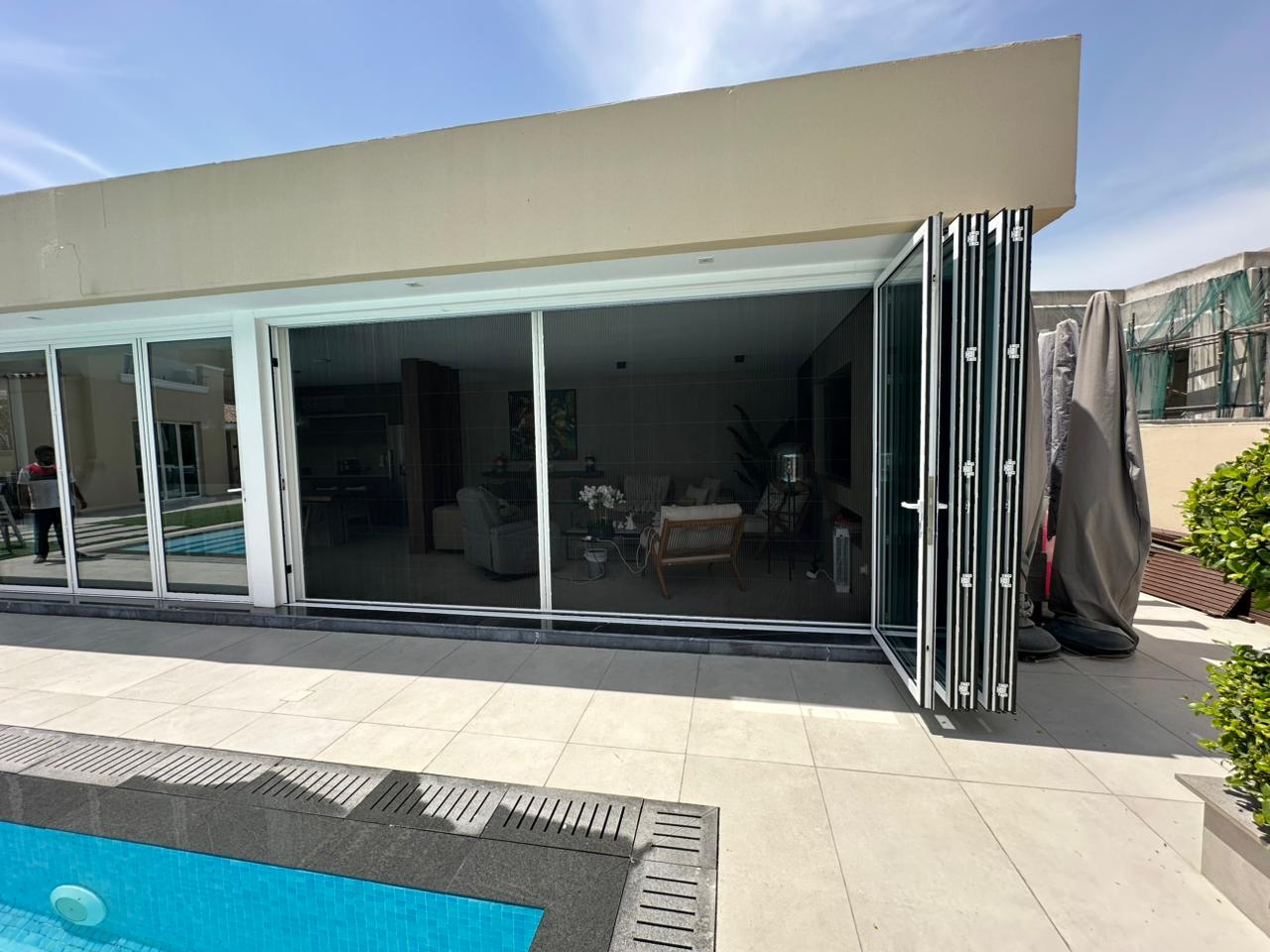
Coastal humidity, blowing sand and months of strong sun are hard on cheap hardware. We build with powder-coated aluminium cassettes and channels that resist corrosion and fading, and we fit UV-stable mesh that will not go brittle and tear after a couple of seasons. Because the sheet winds away when it is not in use, it also spends far less time collecting dust than a panel left up all year.
Upkeep is deliberately simple: a wipe of the cassette and a quick vacuum of the side channels every so often keeps the brake and the glide working as they should. If anything ever needs attention, we are a local workshop you can actually reach, not an overseas supplier. You can see more finished work on our recent projects page, or learn how roller screens sit within our full range of fly screens in Dubai.
We also keep the moving parts serviceable rather than sealed and disposable. If a brake ever needs re-tensioning, or a channel a fresh brush seal after years of sandy winds, those are quick fixes on site — the kind of small after-care that keeps a screen working for the long run instead of being replaced wholesale.
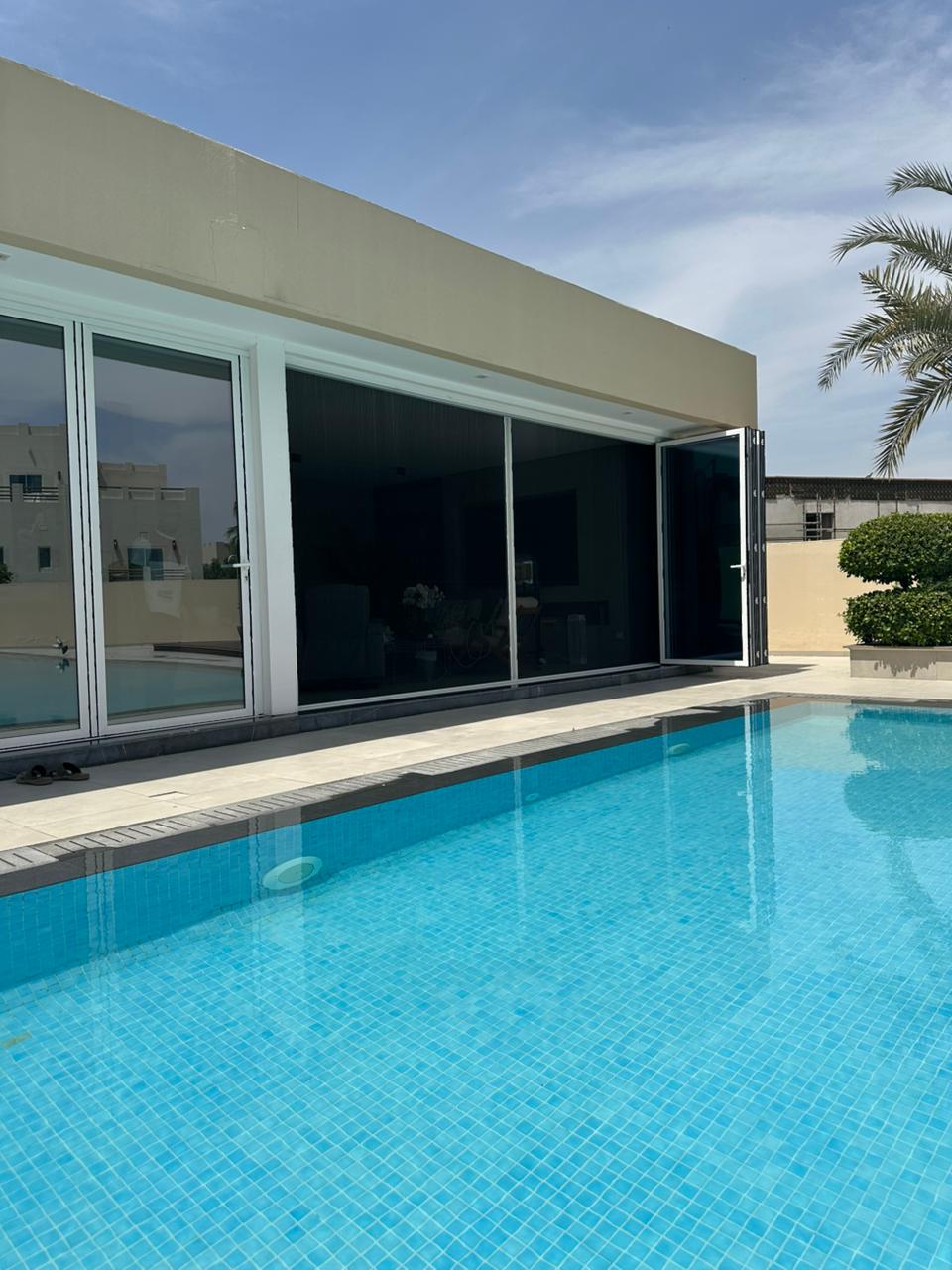
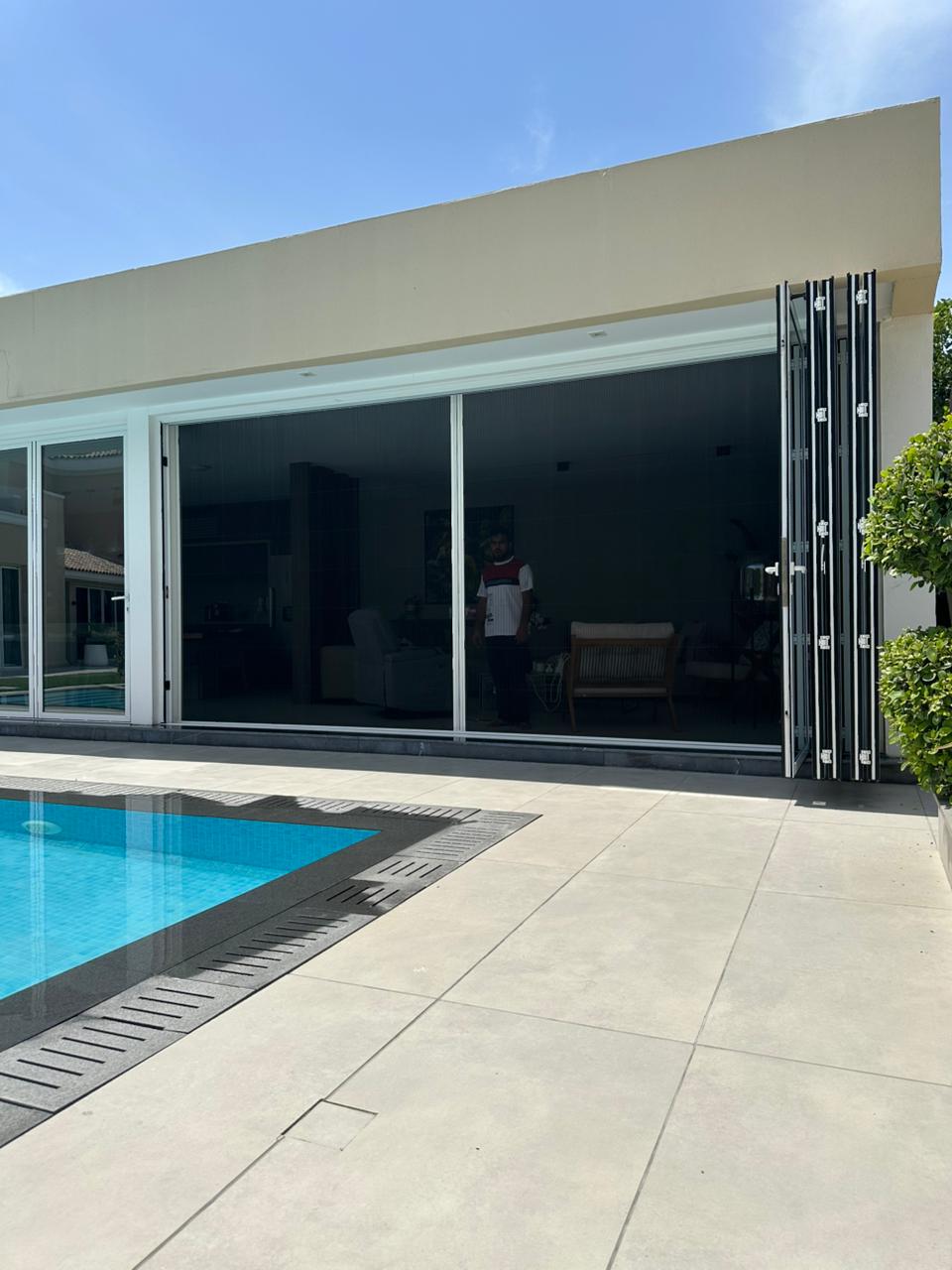
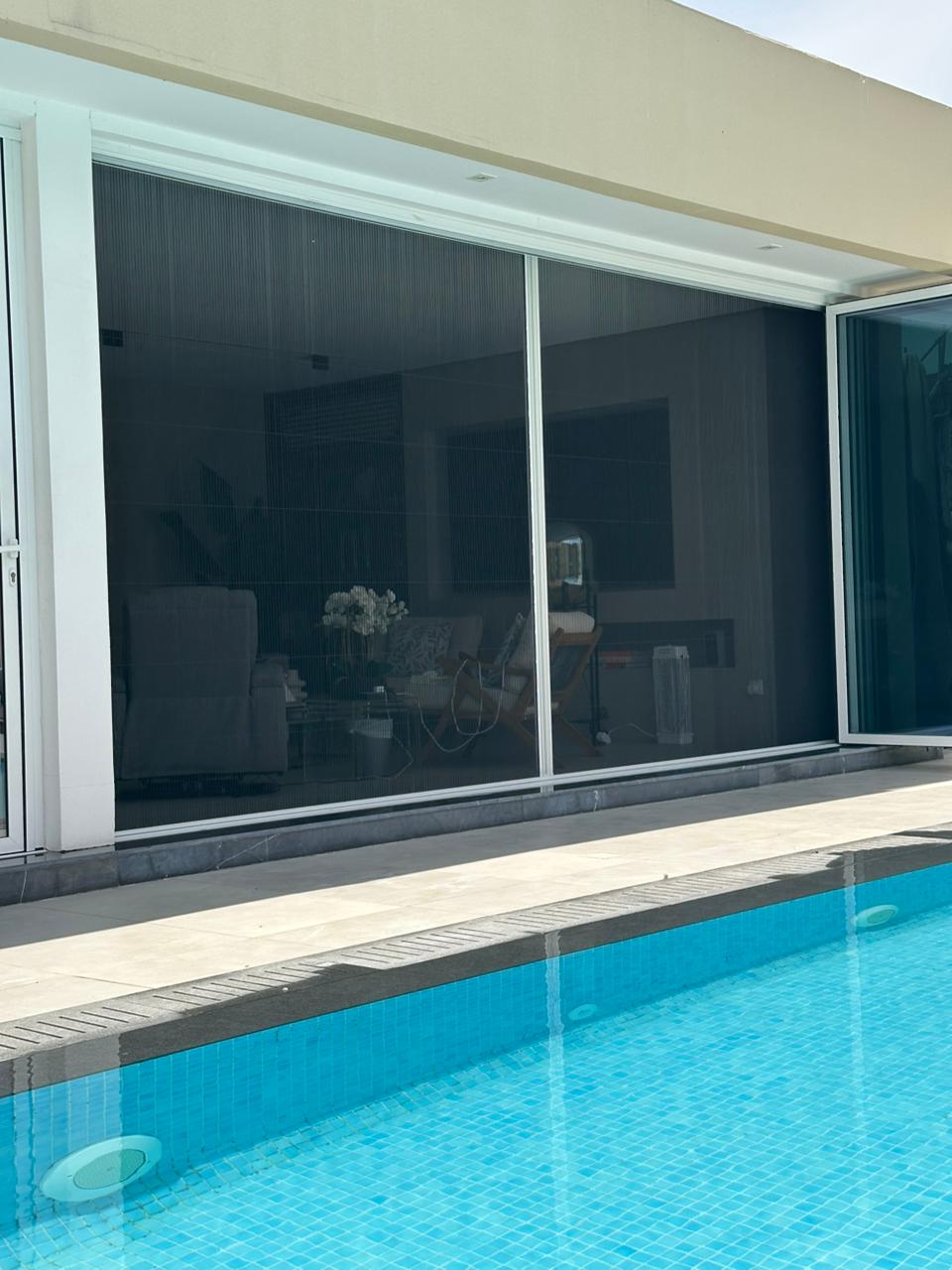
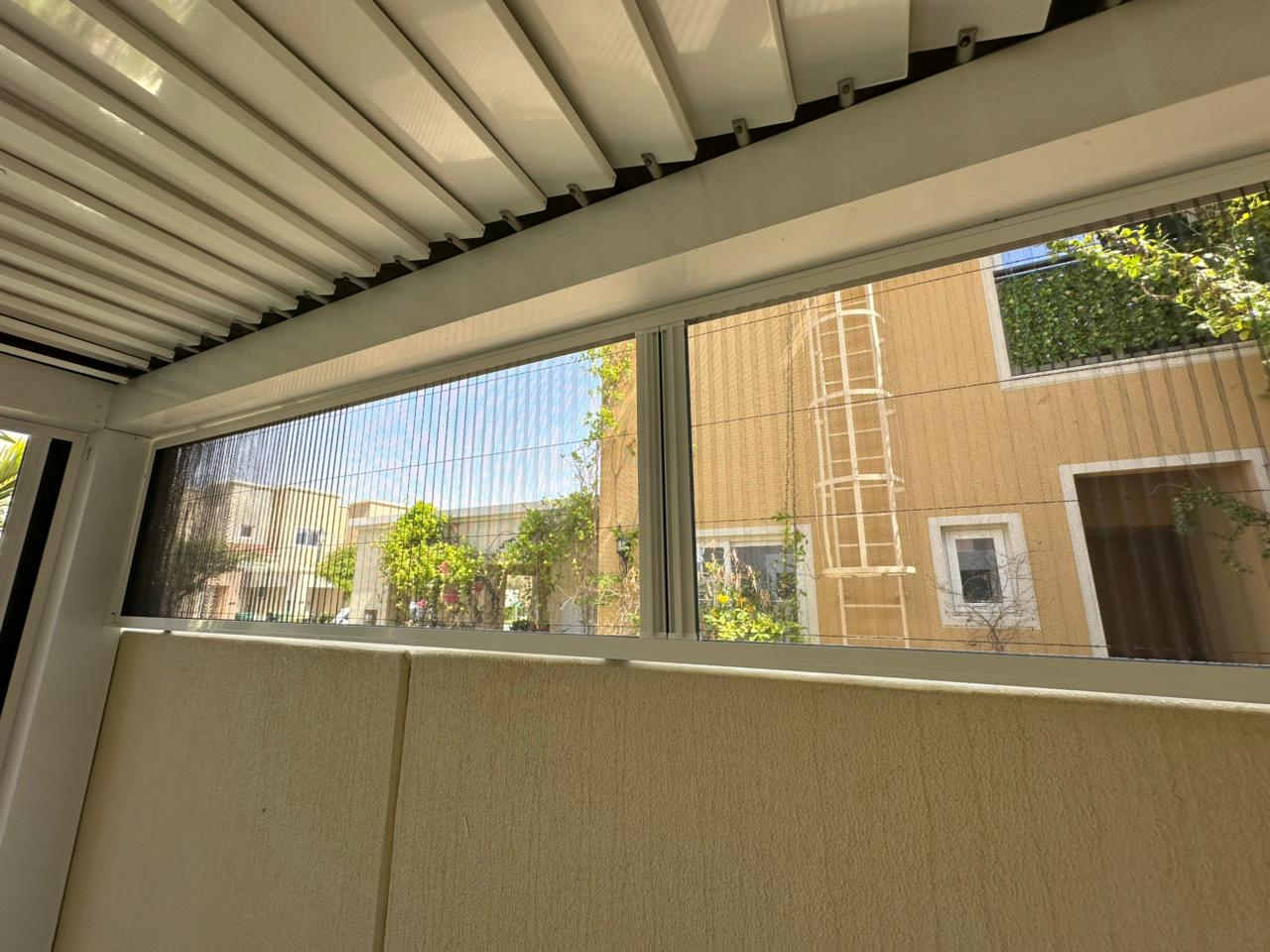
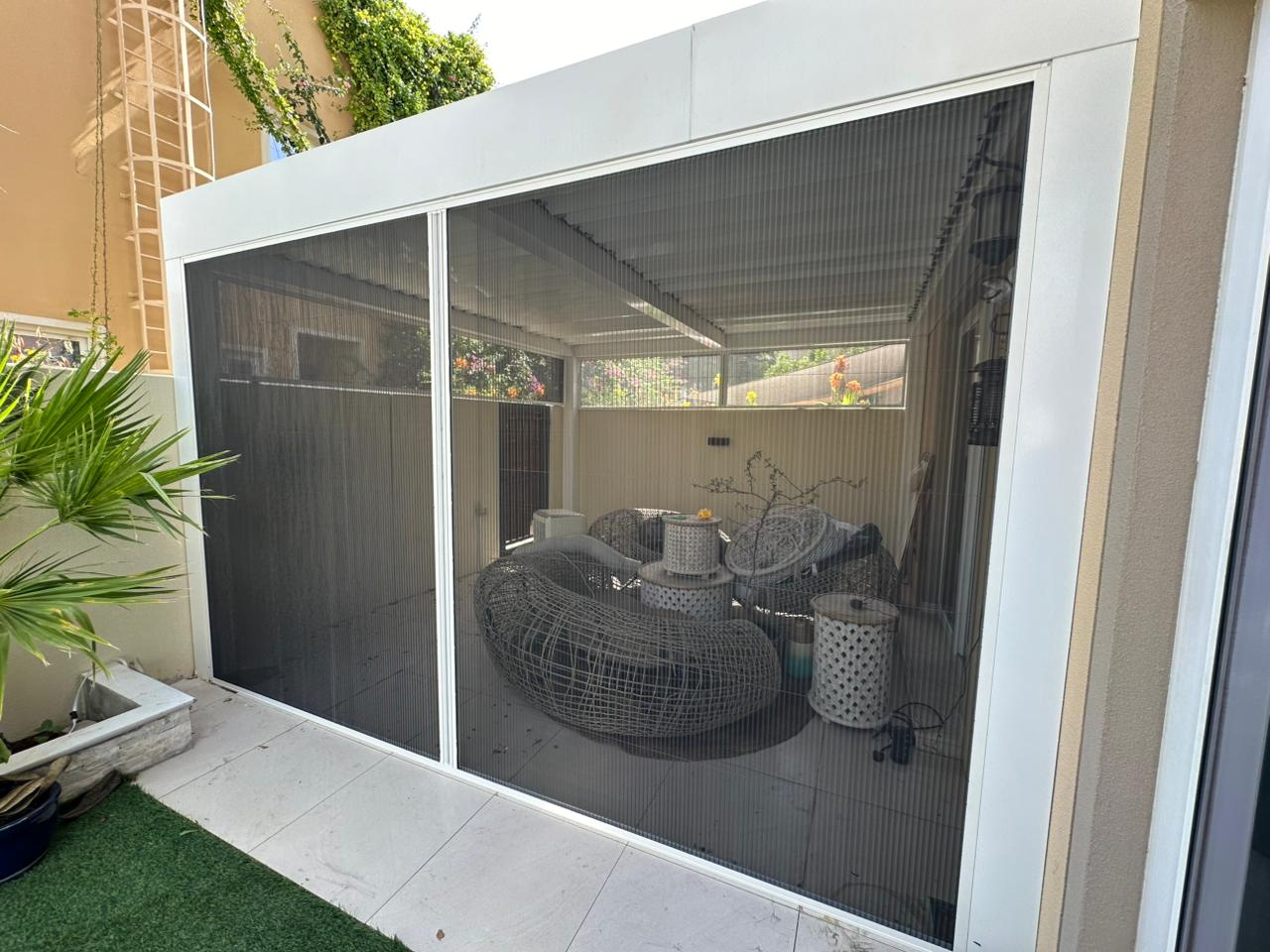
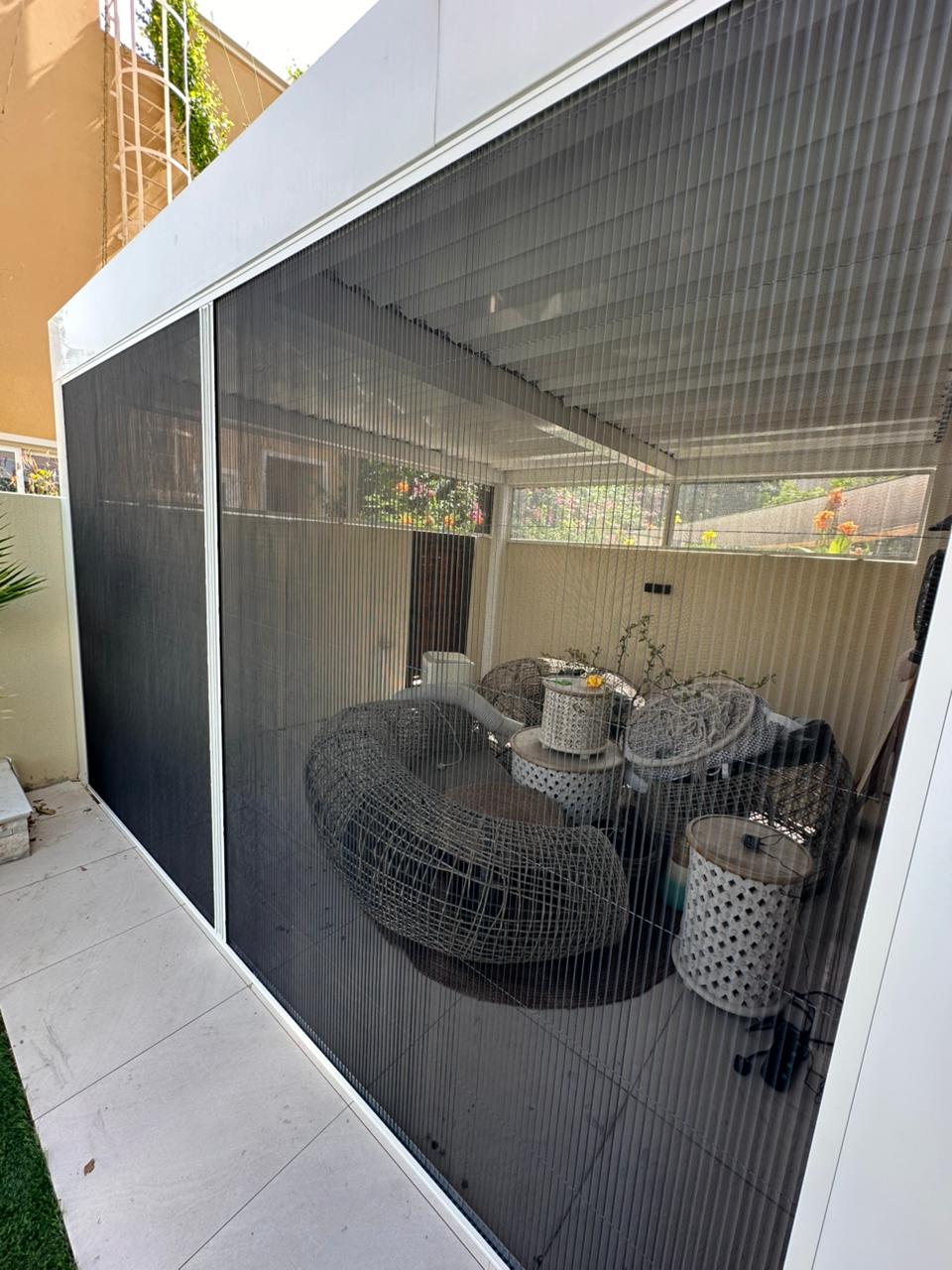
A look at our recent retractable screen work
Retractable screen questions, answered
How do retractable mosquito screens work?
Are retractable fly screens good for sliding doors and large windows?
How much do retractable mosquito screens cost in Dubai?
Will a retractable screen sag or stay tight over time?
Can retractable screens handle Dubai heat, dust and humidity?
Do retractable screens block the breeze or the view?
What is the difference between retractable, pleated and plain-mesh screens?
How long does it take to measure and fit a retractable screen?
Tell us which windows, doors or balconies you would like screened and we will bring samples, measure up and price it on the spot — same-day reply.
No obligation · Custom-made to fit · Samples brought to you