Mosquito net mesh types — the right weave for every room
A screen is only as good as its mesh. The frame governs how it opens; the weave decides what it actually does once it is up. From an open everyday fibreglass to a tight pollen weave or a stainless marine grade, here is what each one does and where it earns its place. The mosquito mesh types Dubai homes need vary from one room to the next, which is the whole reason this page exists.
one for every room and condition
open fibreglass through to stainless
we match the mesh room by room
sliding, pleated, fixed or roller
Mesh, up close and in place
Short clips that show the weave that matters — an open fibreglass screen breathing on a window, a tight no-see-um panel on a ground-floor room, and a stainless mesh going onto a seafront door. Side by side, the mosquito mesh types on offer make their differences plain.
Mosquito mesh types: what the weave actually does
Two screens can look identical from across a room and behave completely differently, because the part that does the work is the mesh, not the frame. The weave settles four things at once: what it keeps out, how freely air moves through it, how clearly you see past it, and how many years it survives the Dubai sun. Get the weave right and a screen all but disappears while doing its job; get it wrong and you either fight for a breeze or let the small stuff in.
That is why there is no single best answer, only a best answer for the room. The mosquito mesh types on the market range from a loose, breezy everyday weave to a dense pollen grade and a woven-metal stainless one, each trading a little of one quality for more of another. A breezy upstairs bedroom and a dusty ground-floor room facing open land want very different things from the same window.
Our job is to read the room and pick accordingly, the same way we do on every job across the city. Most of the mosquito mesh types here are woven polymer — coated fibreglass and its tougher cousins — with metal grades kept for the coast and for security. Whichever it is, the weave is fitted into a screen made to your opening, part of the wider range of mosquito nets we build to measure.
Comfort is not the only thing riding on the choice. An unscreened window open on a warm night lets in more than a breeze, and not every visitor is harmless — the World Health Organization links mosquitoes to a heavy global toll of vector-borne diseases. The right weave keeps the air moving and the biters on the far side of it.
- The weave decides protection, airflow, view and lifespan
- Six core weaves, from open fibreglass to stainless marine
- Tighter weaves stop more but breathe a little less
- Mesh and frame are separate choices — pick each to suit
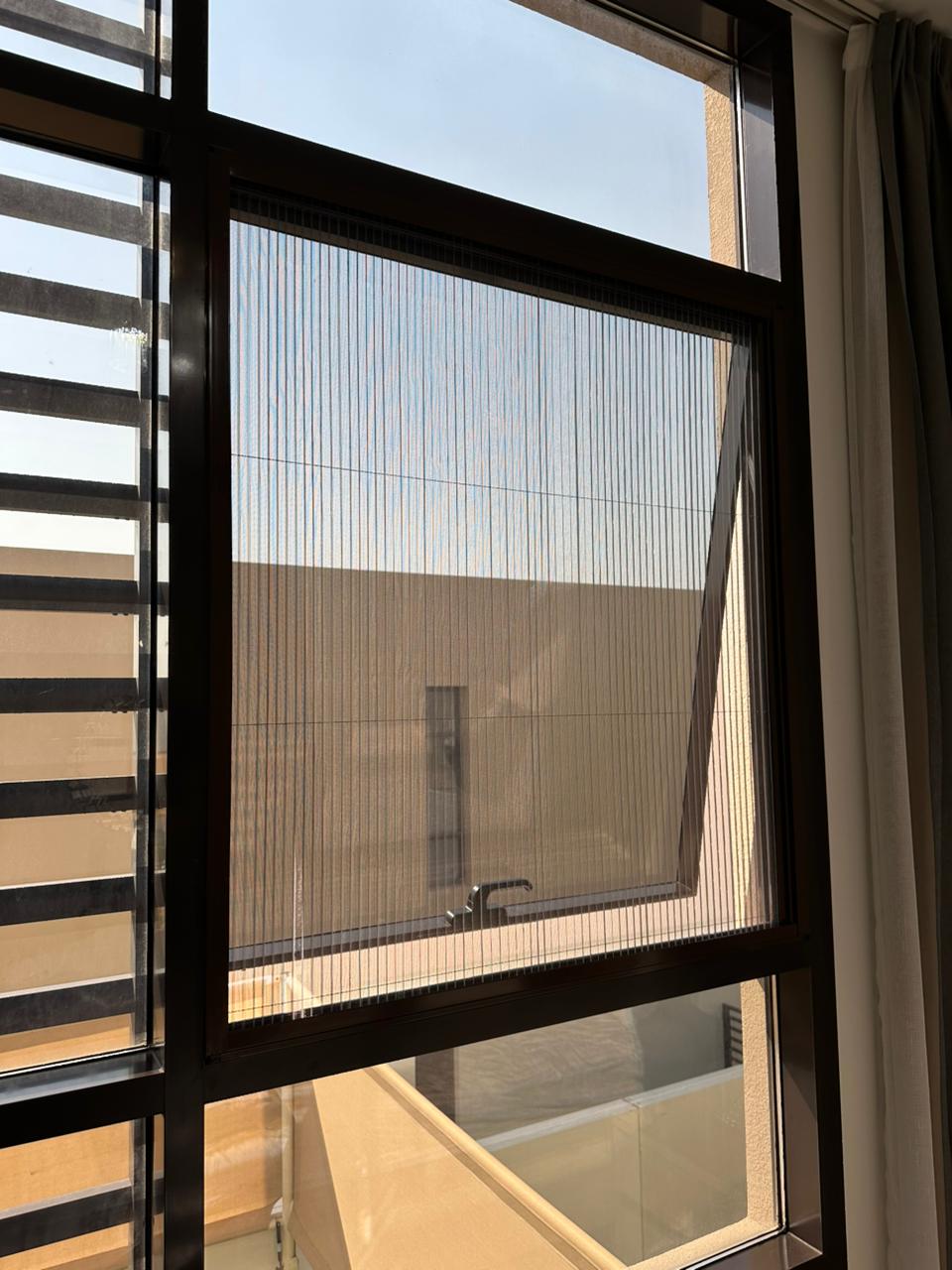
It starts with the gauge
Almost everything about a mesh comes back to one number — the size of the gap between the threads. Open it up and air pours through but so can a midge; close it down and nothing fine gets past, though the breeze softens. Each weave we fit sits at a different point on that scale, chosen on purpose.
Count the openings in any home and most are windows, which is why it is worth seeing the way our window screens come together, plus a few finished jobs nearby.
Whatever the gauge, the mesh is only as good as the screen it sits in: cut square to the opening, held in a frame that runs true, and finished so the weave sits flat and taut rather than bagging in the heat. Every one of the mosquito mesh types we stock works on that same principle, just at a different gauge.
Each weave, and where it earns its place
Six meshes cover almost every home in Dubai. Here is what each is made of, what it stops and the room it suits — the survey then matches one to each opening.
Standard fibreglass
The everyday weave: PVC-coated glass thread in an open gauge. Great airflow, soft on the eye, easy on the wallet — the default for most windows.
For windows →Fine no-see-um
A tighter gauge that shuts out the things you barely see — sandflies, midges and blown grit — for ground floors and homes near open ground or water.
As fixed panels →Pet-resistant
A thick vinyl-coated polyester that laughs off claws and shoves. The one for doors a cat or dog leans on, where ordinary mesh would snag or tear.
On pet doors →Pollen & allergy
Finer again, woven tight enough to catch much of the airborne pollen and fine dust alongside insects — the one to ask about for bedrooms and hay-fever homes.
For whole homes →Solar & shade
Built for blazing west-facing glass and open terraces — it takes a real bite out of solar heat and glare, and keeps the bugs on the outside.
On terraces →Stainless marine
Woven 316-grade steel wire: it ignores salt air, takes the sun for years and resists cutting, so it guards the coast and doubles as a security screen.
Marine & security →Not sure which line your home falls on? That is exactly what the survey is for — we look at the view you want to keep, how much air each room needs, and what it is up against outside, then put the right weave on each opening rather than the same one everywhere. For all their overlap, the mosquito mesh types in this guide each do something the others do poorly.
How we pick the weave for each opening
There is a simple order to it. First, what is the room up against — just mosquitoes, or midges and dust, or harsh afternoon sun, or salt off the sea? That rules a weave in or out. Then, how much air does it need: a stuffy bedroom leans open, a dusty study leans tight. Last, the view: where you sit and look out, we keep the gauge as open as the conditions allow.
Because of that, most homes end up with a mix rather than one mesh throughout — an open weave on the sheltered upstairs windows, something finer on the ground floor, a tougher grade on the doors the family and pets use. The screen format is a separate decision: the same weave can go into a sliding frame, a fixed panel or a motorized terrace screen, whichever suits the opening. In most homes the mosquito mesh types that get used come down to two or three, mixed across the rooms.
None of this needs guesswork on your part. With real swatches in hand we go room to room, weighing each weave’s give-and-take against your light and your view. Flag the one thing that bugs you most when you get in touch, and that becomes the starting point for what we suggest.
Read the room
What is it up against:
Mosquitoes Midges & dust Sun & glare Sea saltWhat it needs:
Airflow A clear view Toughness Long lifeThen we choose:
The weave Per room Free surveyMosquito mesh types: how much does each cost?
The weave is one of the smaller levers on a quote — size and screen format move it more — but it does shift the figure. As a rough guide, here is what each mesh adds on a typical window panel; the firm price always follows the survey. The mosquito mesh types available in Dubai cover everything from a budget fibreglass to a premium steel.
| Mesh | Best for | From (AED) |
|---|---|---|
| Standard fibreglass | Everyday airflow | 150 |
| Fine no-see-um | Sandflies, midges, dust | 180 |
| Pet-resistant | Doors with cats or dogs | 220 |
| Solar / shade | Heat and glare | 260 |
| Stainless marine | Salt air and security | 400 |
A few things decide where in that range you land, and the surveyor walks through each on site:
- The weave — an open fibreglass is the base; finer, tougher and metal grades step up from there.
- How large the opening is — a broad span uses more material and calls for a beefier frame than a small window.
- The screen it goes in — a plain fixed panel costs less to mesh than a sliding or folding system.
- How many openings — do a whole home at once and the per-opening cost generally eases.
- Finish — a frame colour matched to the joinery or an extra-discreet fixing adds a little.
A binding price waits until we have walked the home and measured each opening. On the survey we note what each room is up against, suggest a weave for it, and leave an itemised quote with no obligation — so what you pay reflects the mesh each room actually needs, not a single rate across the house. With every opening priced separately, the quote shows where the money goes, line by line.
Seen over the years a screen stays up, the gap in price between weaves is small — a few dirhams more for a mesh that holds back the dust, lasts longer in the sun, or survives the salt usually pays for itself. Among the mosquito mesh types we fit, the dearer ones tend to be the cheapest in the long run wherever the conditions are hard on a screen.
Polymer or metal — the two mesh families
Strip away the names and every weave belongs to one of two camps, woven thread or woven wire. Which camp your home needs is usually the first thing to settle. Sorting the mosquito mesh types into those two families settles the first decision; the survey takes care of the detail.
Woven polymer
Fibreglass and its tougher polyester relatives — standard, fine, pet, pollen and solar all live here. They are light, soft, come in colours that vanish against a frame, breathe well and cost the least. If one is damaged it is cheap to re-mesh. For the great majority of inland homes, a polymer weave is all you will ever need.
Woven metal
Aluminium and, better still, 316 stainless. Metal holds its shape, takes years of sun without going brittle, and — in stainless — ignores salt and resists a blade, so it guards the coast and works as security. It costs more, weighs more and offers fewer colours, but where salt or safety is in play nothing polymer comes close.
Most homes are squarely in one camp; the survey settles any that are not. Where the sea is the deciding factor we turn to the stainless, marine-grade options, and a seafront tower such as those in Dubai Marina is exactly where that pays off.
Whatever the weave, a screen only ever looks after its own openings. Out in the wider city, bodies like Dubai Municipality run their own seasonal mosquito-control drives, focused on standing water and shared outdoor ground; screening your home is the private half of the same effort — your windows and doors taken care of, so the two halves meet.
Screens these meshes go into:
Sliding screens
Rigid panels that glide on a track — the usual pick for patio doors.
Explore →Fixed screens
Permanent panels for windows that stay shut — ideal for fine mesh.
Explore →Magnetic screens
Self-closing curtains — the usual home for pet-resistant mesh.
Explore →Pleated screens
Folding mesh for wide spans and glass walls.
Explore →Retractable screens
Roll-away mesh for a door used now and then.
Explore →Plain mesh screens
Side-drawing flat mesh for very tall or wide openings.
Explore →Areas we cover
We fit every mesh across Dubai and beyond.
Explore →The right call, the first time
Choosing a weave sounds fiddly, but it rarely is once someone has stood in the room with you. The mistakes we are called to fix are nearly always an over-tight mesh on a room that needed air, or a cheap weave somewhere it was never going to last — both avoidable with five minutes and a sample in hand. Colour counts as much as gauge, too: a dark charcoal weave is barely there when you look through it, whereas a paler mesh is more obvious, especially against bright glass.
The advice is only as sound as the people giving it. A quick read on the company never hurts, and our full range of mosquito nets covers everything from a single awkward window to a villa done throughout.
Why homeowners come to us for the right mesh
People come to us because we treat the weave as a real decision, not a box to tick. A lot of suppliers fit the same fibreglass to every opening and move on; we carry the full set, bring samples to the survey and hold them up against your light and your view before anyone commits. It is a small thing that makes a daily difference for years.
It helps that we make and fit the screens ourselves. Knowing exactly how each weave behaves in a frame — how a fine mesh tensions, how stainless sits, how solar cloth reads against bright glass — comes from doing it, not reading a brochure. Nothing is handed to a sub-contractor: the same team measures, builds and installs, so the advice and the workmanship are the same people.
We will also talk you out of paying for more than you need. If a room only ever sees the odd mosquito, an open everyday weave is the honest answer, and we will say so rather than upsell a marine grade. Want to vet us before booking? Here are who we are, recent projects, and customer reviews.
Most of all, the weave has to keep doing its job long after fitting day, through dust storms, hard sun and salt air. That is the test we choose against. Picked well, the mosquito mesh types we fit just fade into the window and get on with it — air in, insects out, year after year, with nothing to think about.
Mesh, on real jobs
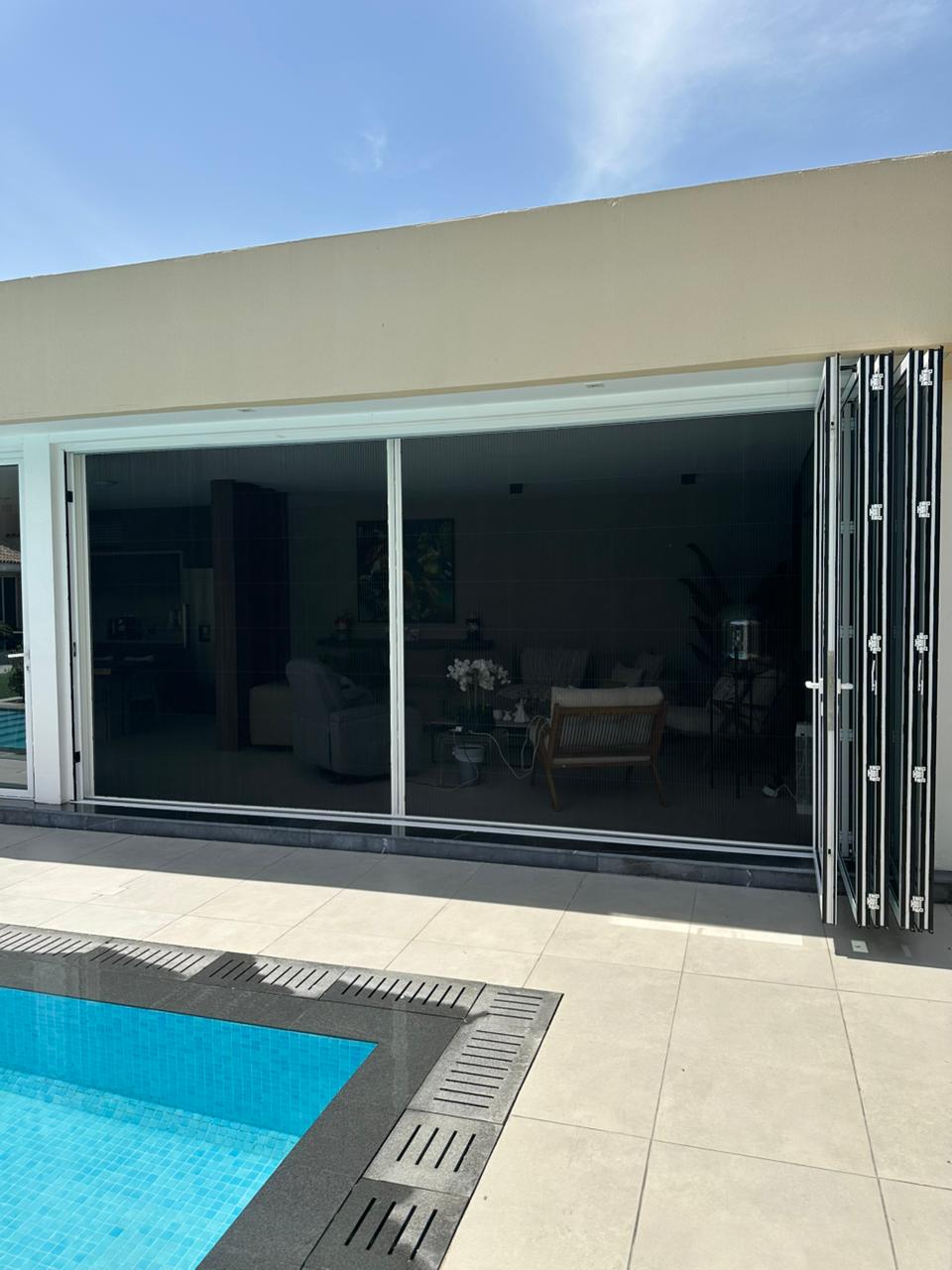
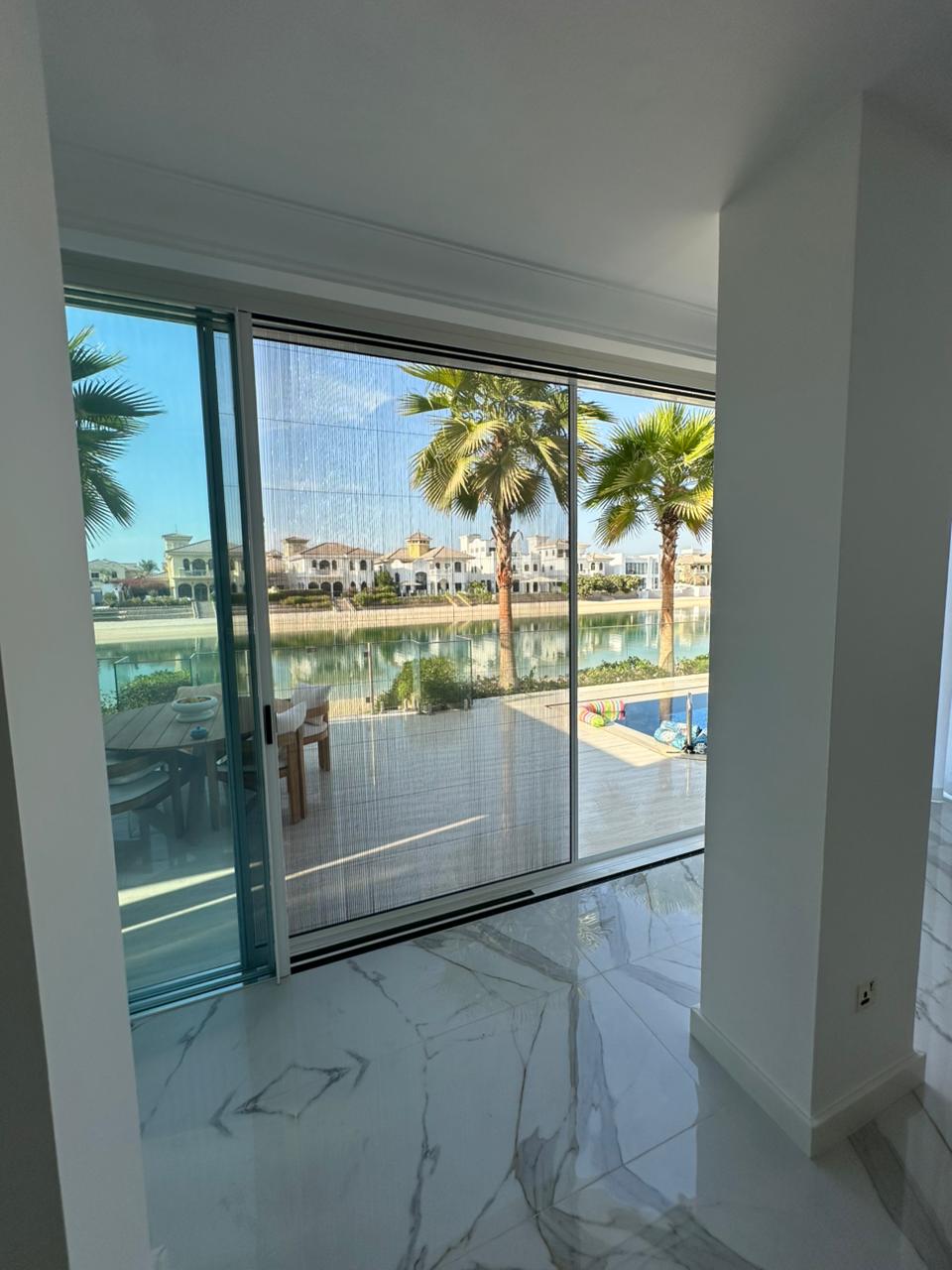
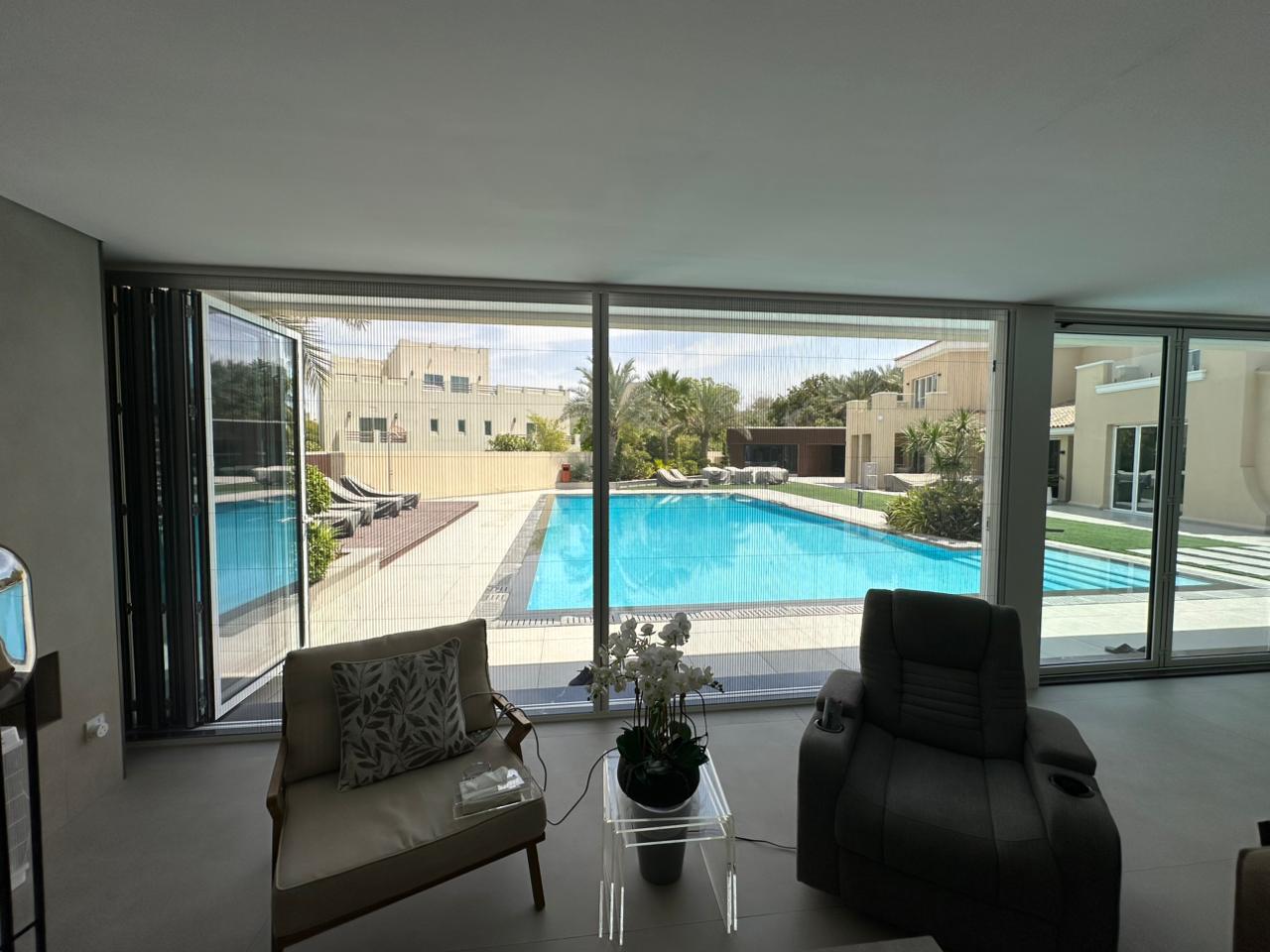
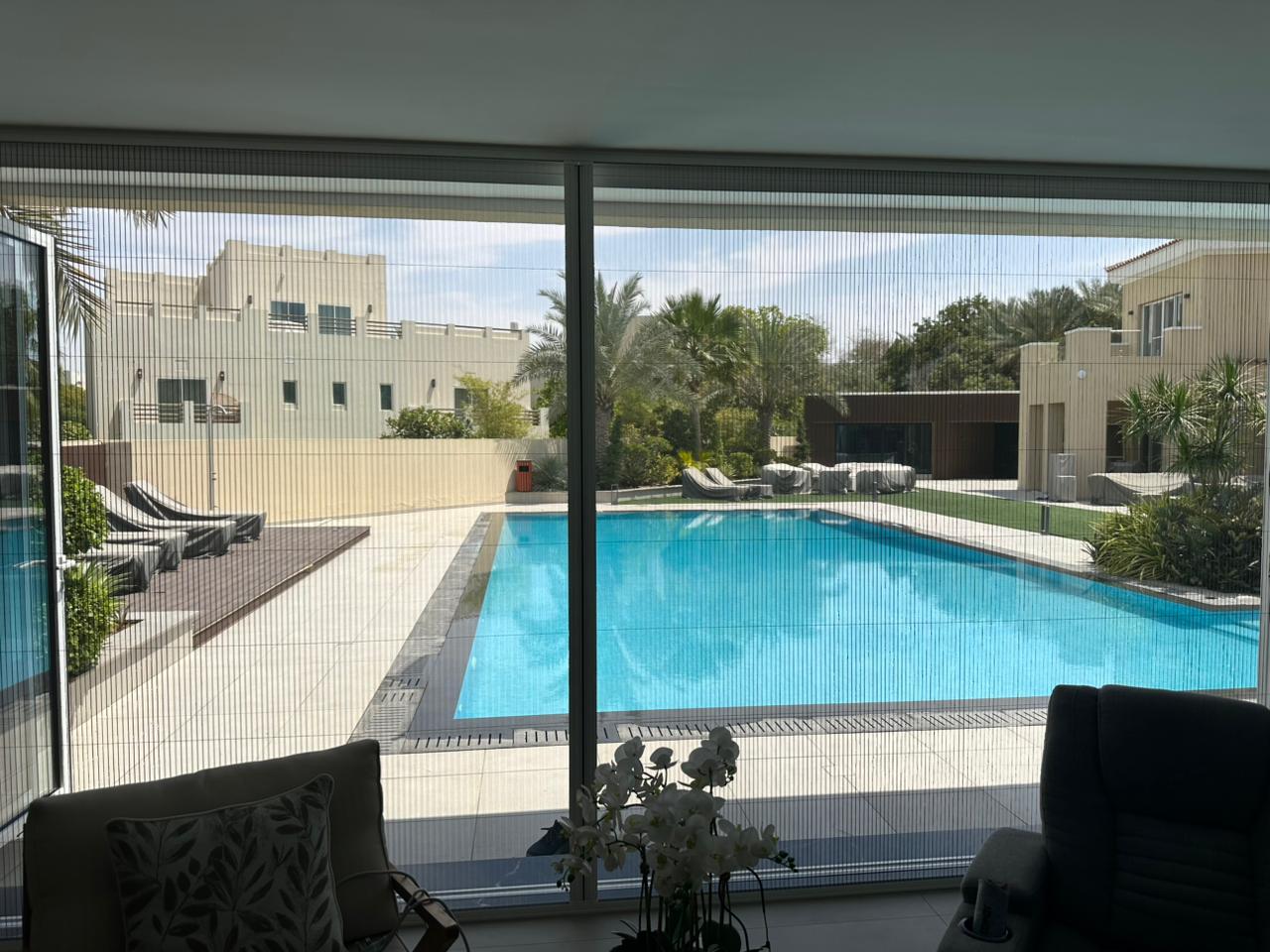
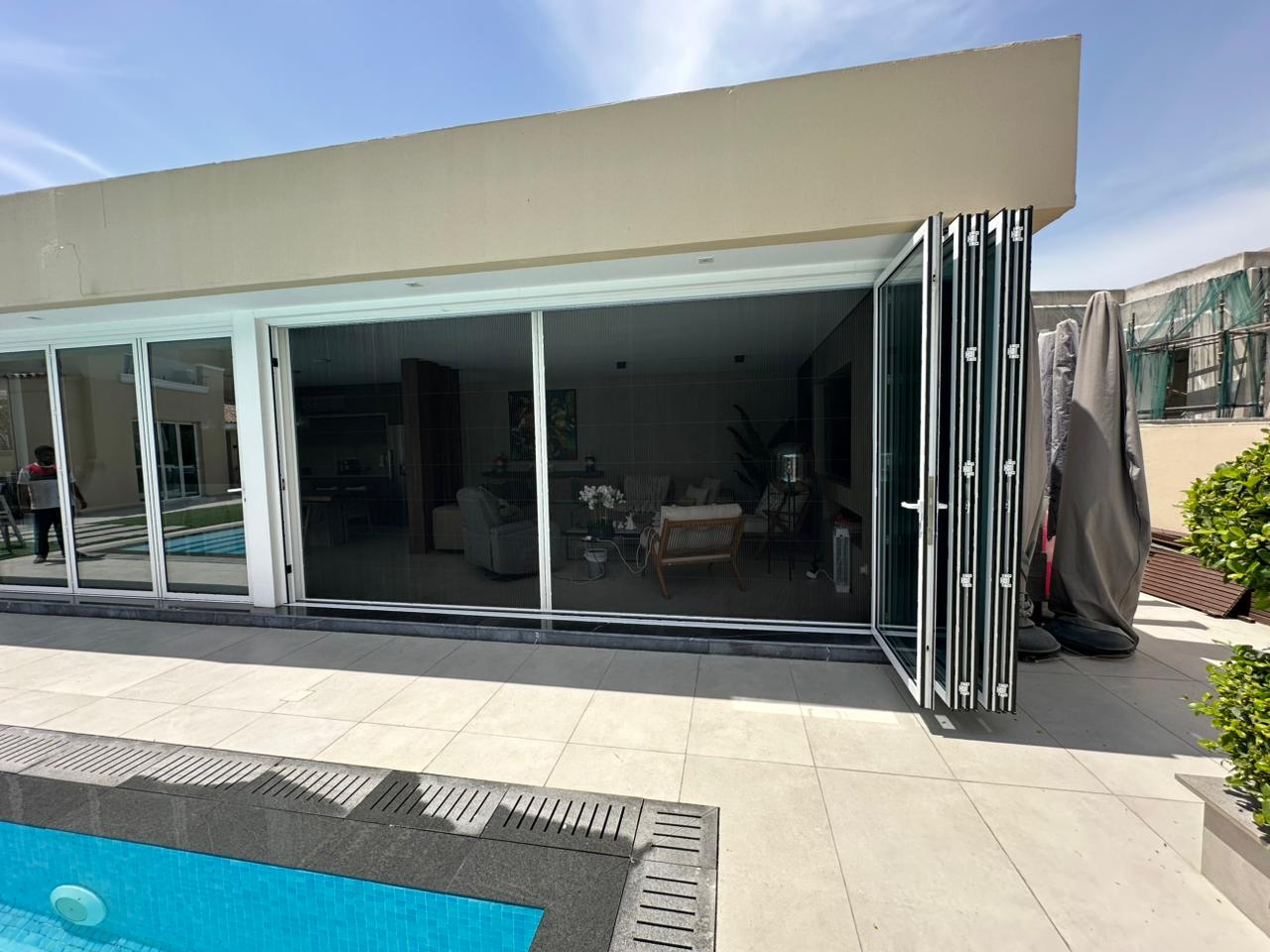
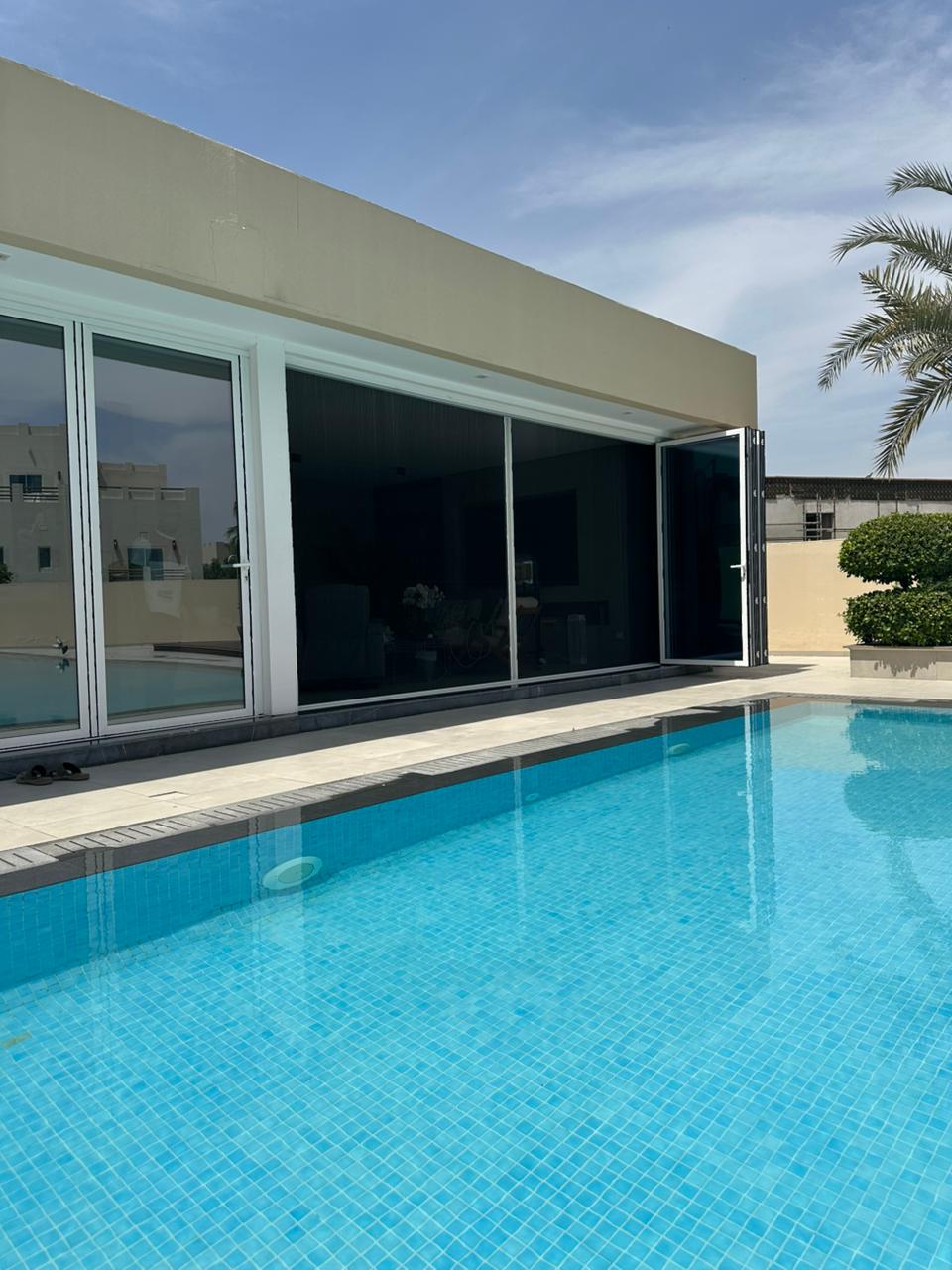
A small sample of our recent work. We are still building our own library of close-up mesh photos, so these images fill in until it is ready.
How we land on your mesh
Call
Tell us the rooms, the view you want to keep, and what gets in or bothers you most.
Survey
We bring samples, hold each against the light and the room, and recommend a weave per opening.
Make
We cut and assemble each screen to your measurements, fitting whichever weave that room was specced for.
Fit
Installation day: each screen goes in, gets a final check that it runs true, and we tidy up after ourselves.
Every weave we fit
The full set we keep, from the airiest everyday weave to woven steel.
Mosquito mesh questions, answered
What is the difference between standard and fine insect mesh?
Which mosquito mesh is best if I have cats or dogs?
Is there a mesh that helps with pollen or dust allergies?
What mesh copes with sea air?
Can a mesh cut down heat and sun glare as well as insects?
Does a finer mesh block too much air?
Can any mesh be fitted to any type of screen?
Which mosquito mesh lasts the longest?
Tell us the rooms and what you want from each — air, a clear view, protection from dust, sun or salt — and we will bring samples, recommend a weave per opening, and leave one itemised written quote, with no obligation.
Every weave in stock · Matched room by room · Free survey