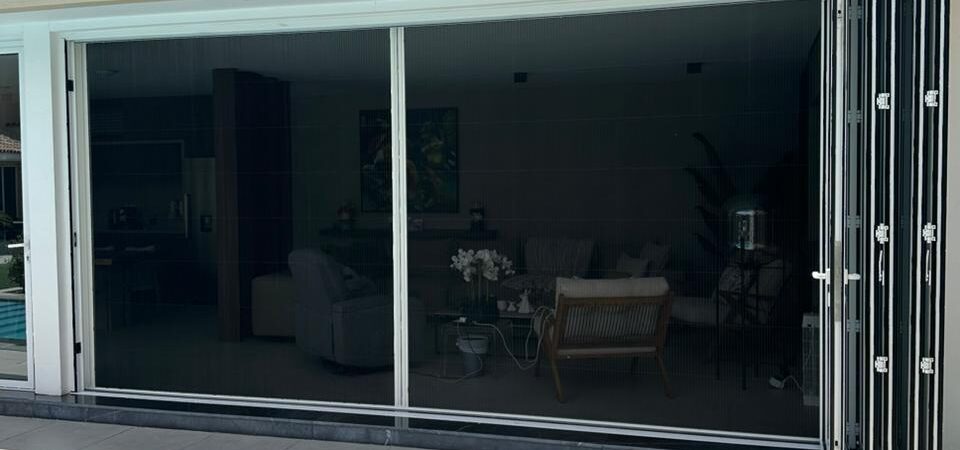
The short answer
The best mosquito screen for your home is the one that matches how the opening is used, not the one with the best marketing. Fixed screens suit windows you never walk through. Sliding screens suit sliding windows and patio doors. Pleated screens suit wide bifolds and French doors. Retractable rollers suit doors used occasionally. Magnetic screens suit rentals and tight budgets. Motorized screens suit very large or unreachable openings. Plain mesh suits wide picture openings where the view matters most.
Everything below explains how to make that match with confidence, including what each type costs in Dubai, how each one behaves in heat, dust and salt air, and what you can fit in a rented apartment without drilling.
First, the terminology: mosquito net, fly screen, insect screen or mosquito mesh?
In the UAE these four terms are used interchangeably for the same product. “Mosquito net” is the most common phrase among residents, “fly screen” is the British and Australian term, “insect screen” is the technical one, and “mosquito mesh” usually refers to the fabric rather than the whole unit.
That matters because choosing a screen is really two separate decisions:
- The system — the frame and how it opens: fixed, sliding, pleated, retractable, magnetic, motorized, plain mesh or stainless steel.
- The mesh — the weave itself: standard fibreglass, fine no-see-um, pet-resistant, pollen, solar or marine-grade stainless.
This guide covers the first decision. For the second, see our detailed breakdown of mosquito mesh types and which weave suits which room. Almost any mesh can go into almost any system, so get the system right first.
Why the choice matters more in Dubai than in most cities
A screen that works fine in a temperate climate can fail quickly here. Five local factors change the calculation:
- Heat and UV. Direct Gulf sun degrades cheap plastics and untreated mesh. Powder-coated aluminium frames and UV-stable mesh last; unbranded PVC kits usually do not survive a full summer on a west-facing balcony.
- Dust. Fine dust is the single biggest cause of screens becoming stiff or noisy. Systems with exposed bottom tracks need occasional vacuuming. Roller cassettes stay cleaner but are harder to clear once grit gets inside.
- Salt air. On Palm Jumeirah, Dubai Marina and other coastal communities, standard steel hardware corrodes. Marine-grade aluminium and 316-grade stainless mesh are worth the upgrade.
- Rain events and breeding. Standing water after heavy rain drives mosquito numbers up. In April 2026, Dubai Municipality — working with the Ministry of Health and Prevention and the Ministry of Climate Change and Environment — expanded biological control after storms, including releasing predatory fish into ponds and drainage systems; the municipality breeds up to 20,000 of these fish a year as part of its integrated pest management programme (The National). Municipal control reduces pressure at source; screens are what keeps the remainder out of your rooms.
- Daytime biters. The World Health Organization notes that the mosquitoes which spread dengue, primarily Aedes aegypti, are active during the day and lists window screens among recommended household protection measures. Researchers have also reported detecting dengue virus in Aedes aegypti mosquitoes collected in Dubai (Emerging Infectious Diseases, August 2026). A screen that only gets closed at night solves half the problem — which is a strong argument for systems that are easy enough to use all day. Which species is actually biting you decides the timing, and we break that down in our field guide to the mosquito species that live in the UAE.
The eight screen types at a glance
| Type | How it works | Best for | Typical span | From (AED) | Main trade-off |
|---|---|---|---|---|---|
| Fixed | Framed panel clipped or screwed into the reveal | Windows you never walk through | Any window size | 120 | Cannot be walked through |
| Sliding | Framed panel glides on its own track | Sliding windows and patio doors | Up to multi-panel walls | 200 | Needs track space beside the glass |
| Pleated | Concertina fabric on cords, stops anywhere | Bifolds, French and patio doors | Up to ~6 m wide, ~3 m high | 350 | Bottom track collects dust |
| Retractable | Spring roller in a slim cassette | Doors and windows used occasionally | ~1.6 m window, ~3.6 m twin | 250 | Roller mechanism is the wear point |
| Magnetic | Curtain or frame with self-sealing magnets | Rentals, budgets, constantly used doors | Single and double doors | 120 | Least durable; no security value |
| Motorized | Powered cassette, remote or app controlled | Very large, tall or unreachable openings | 6 m+ spans, atriums | 1,800 | Cost and power supply |
| Plain mesh | Flat sheet drawn sideways into a side cassette | Wide openings where the view matters | Up to ~9 m wide, ~6 m high | 750 | Overkill on small windows |
| Stainless steel | Woven 316 steel in a security frame | Ground floors, villas, coastal homes | Window and door sized | 450 | Highest cost per panel |
Type by type: what each one is actually good at
Fixed screens — the default for windows
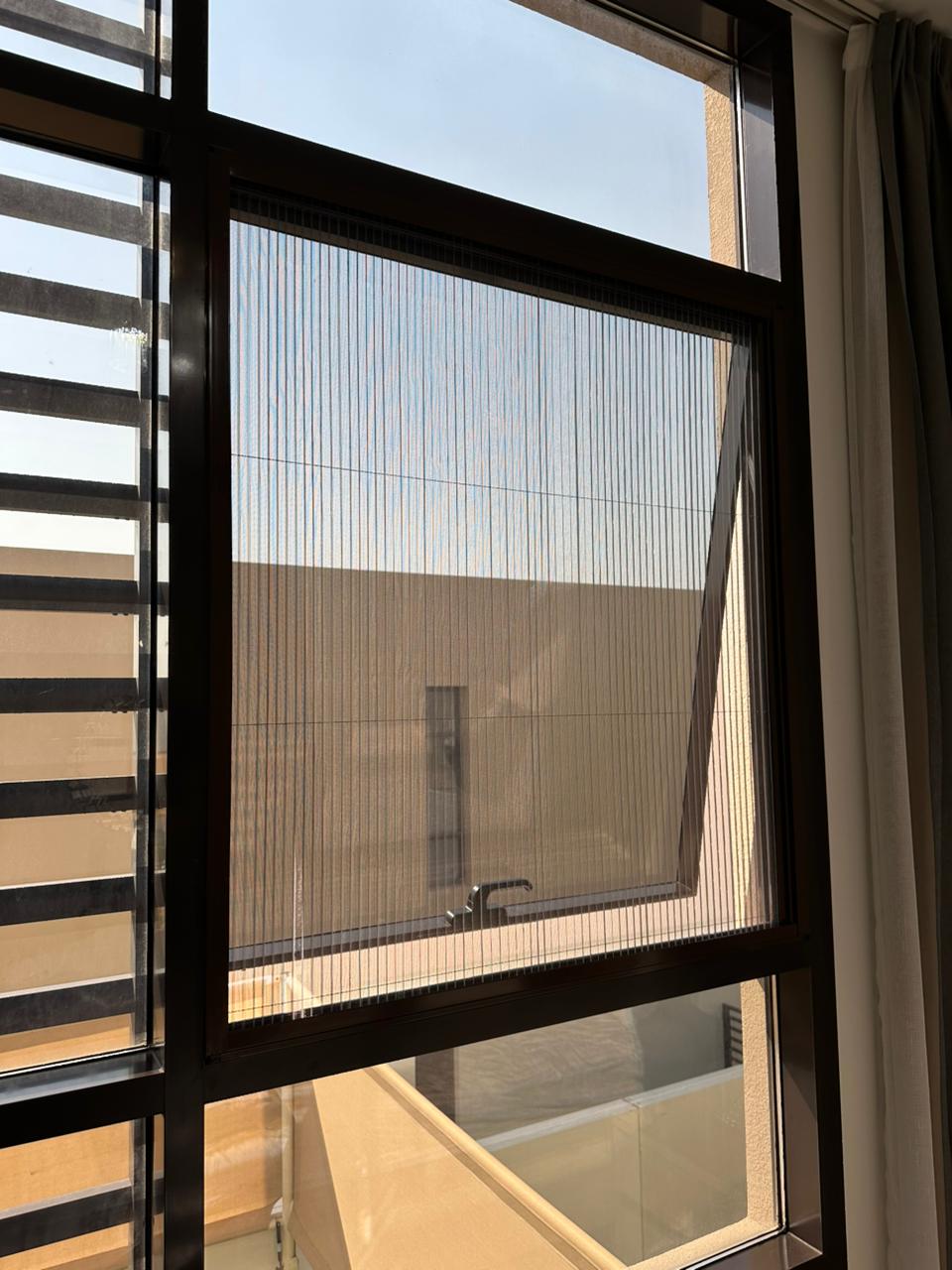
A tensioned mesh panel in a slim aluminium frame, either clipped in so it lifts out for cleaning or screwed in permanently. There is no mechanism to wear out, which is exactly why it is the cheapest and most reliable option for any window you open for air but never climb through.
Choose it for: bathroom and kitchen windows, bedroom windows, stairwell and high-level windows, balcony vent panes, fixed glass side panels on doors.
Skip it for: anything you need to walk through.
Price: from AED 120 for a small vent panel, AED 180 for a standard bedroom panel, AED 320 for a large picture pane.
More on fixed mosquito screens
Sliding screens — the natural match for sliding glass
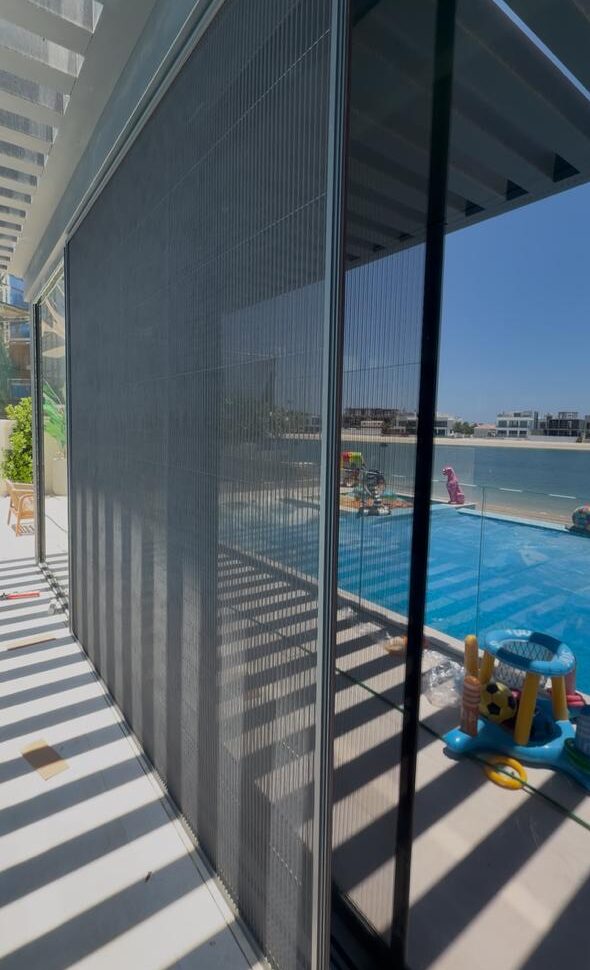
A framed mesh panel running on its own track alongside the glass, opened with one hand and parked almost out of sight. Because it mirrors how the window already works, it is the most intuitive system in most Dubai apartments, where sliding windows and balcony doors dominate.
Choose it for: sliding bedroom and living-room windows, balcony and patio doors, kitchen sliders, large villa glass walls using twin-track or paired panels.
Skip it for: hinged or French doors, and openings with no room for a track beside the glass.
Price: from AED 200 for a window panel, AED 350 for a door panel, AED 650 for a twin-track patio set, AED 1,100 for a multi-panel glass wall.
More on sliding mosquito screens
Pleated screens — the wide-opening specialist
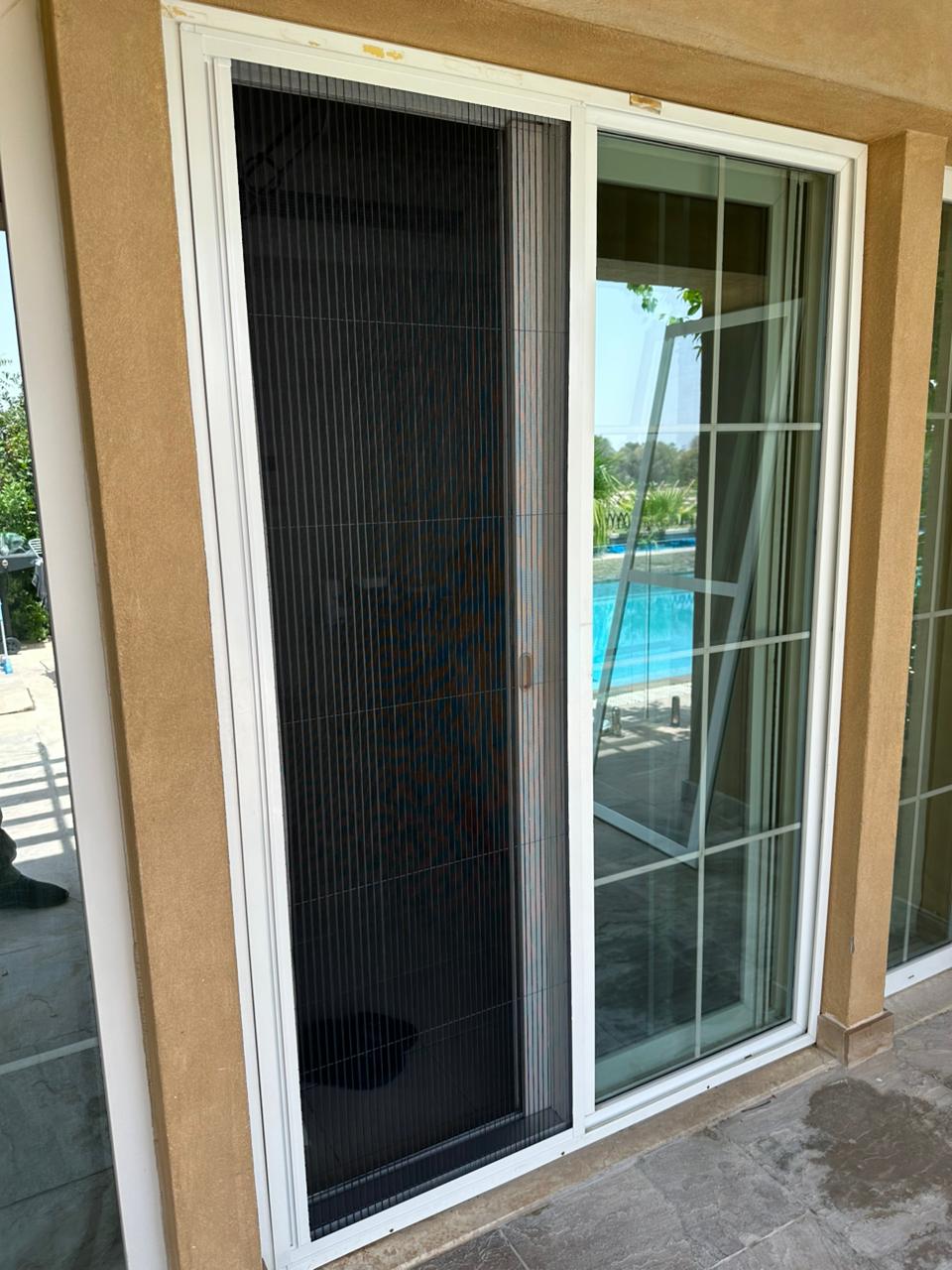
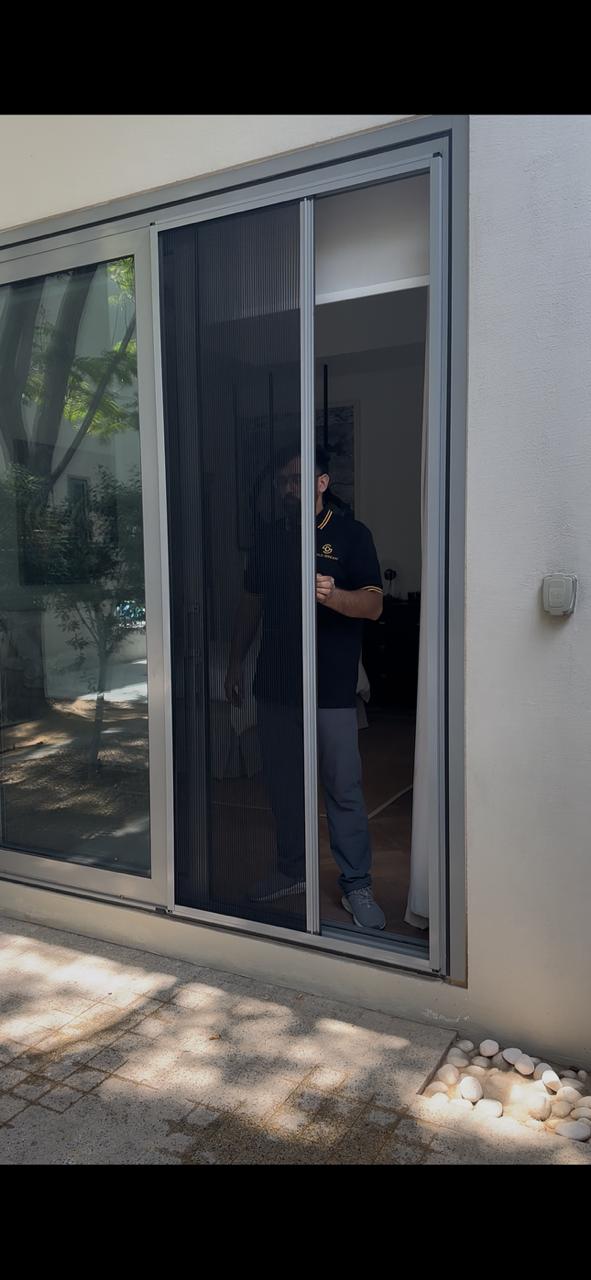
Concertina fabric held in shape by tensioned cords, gliding on a low-profile bottom track. It stops wherever you leave it, opens from either side or the centre, and folds down to a few centimetres. Single panels reach around 1.5 m on windows and 3 m on doors; double-pleated versions cover French doors up to about 4 m and bifolds up to about 6 m, at heights up to roughly 3 m.
Choose it for: bifold and stacker doors, French doors, wide patio openings, villa terraces, balconies where you want an uninterrupted skyline when the screen is parked.
Skip it for: small windows, where a fixed panel does the same job for a third of the price.
Price: from AED 350 for windows, AED 650 for single and double doors, AED 1,200 for bifold and sliding door sets.
More on pleated mosquito screens
Retractable roller screens — tidy when you do not need them
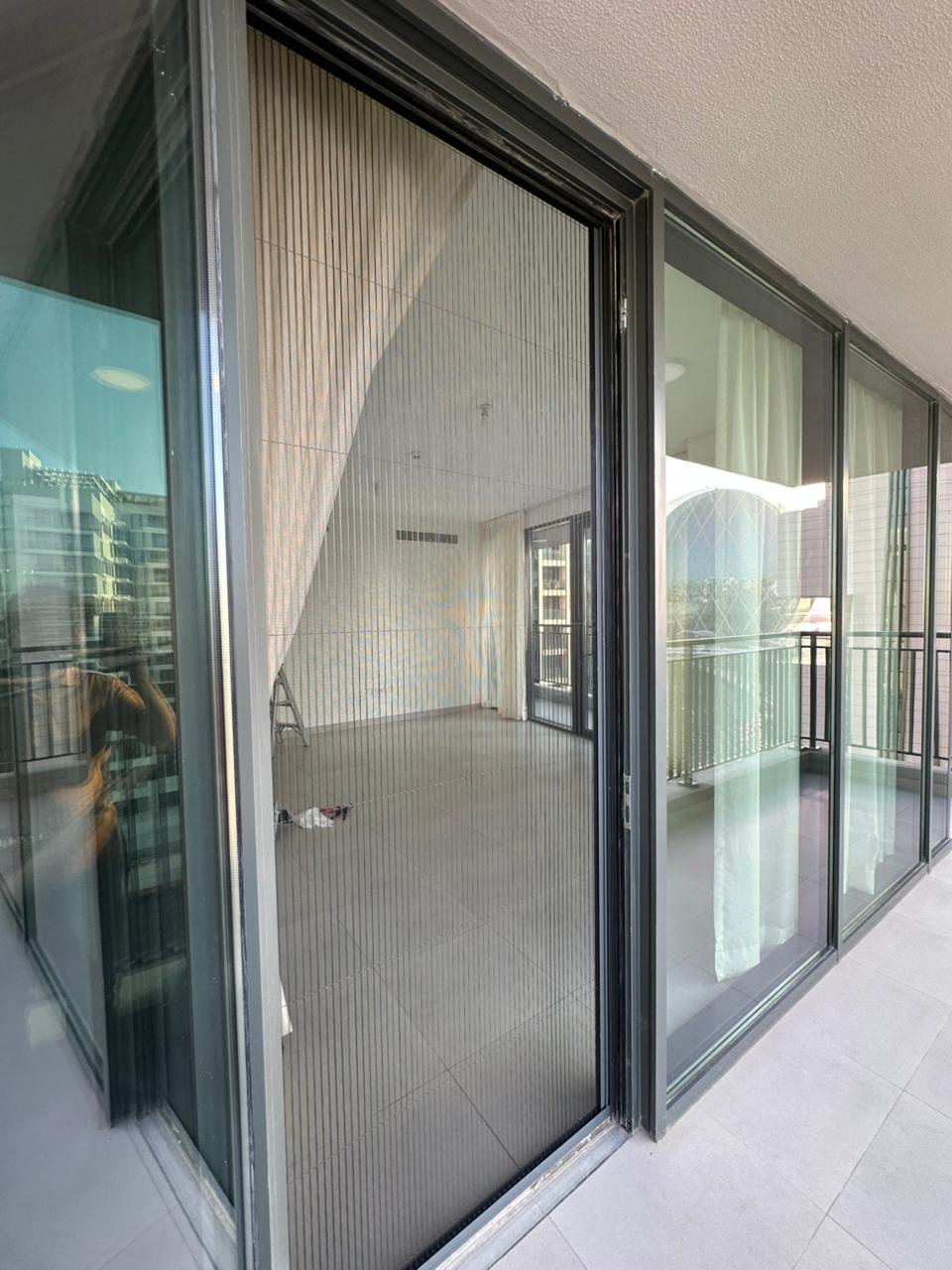
A spring-loaded roller in a slim aluminium cassette, typically 35 mm deep, with a friction brake so the mesh holds position. Pull it across when you want air, let it roll away when you do not. Single window units run to about 1.6 m wide, single doors to about 1.2 m, twin units to around 3.6 m, and chain-operated versions to roughly 3 m high.
Choose it for: doors and windows used seasonally rather than daily, and any opening where you want zero visible hardware most of the year.
Skip it for: doors that are opened dozens of times a day, where a pleated or sliding panel takes the wear better.
Price: from AED 250 for windows, AED 450 for doors, AED 700 chain-operated, AED 900 for twin units, AED 1,500 motorized.
More on retractable mosquito screens
Magnetic screens — the rental and budget answer
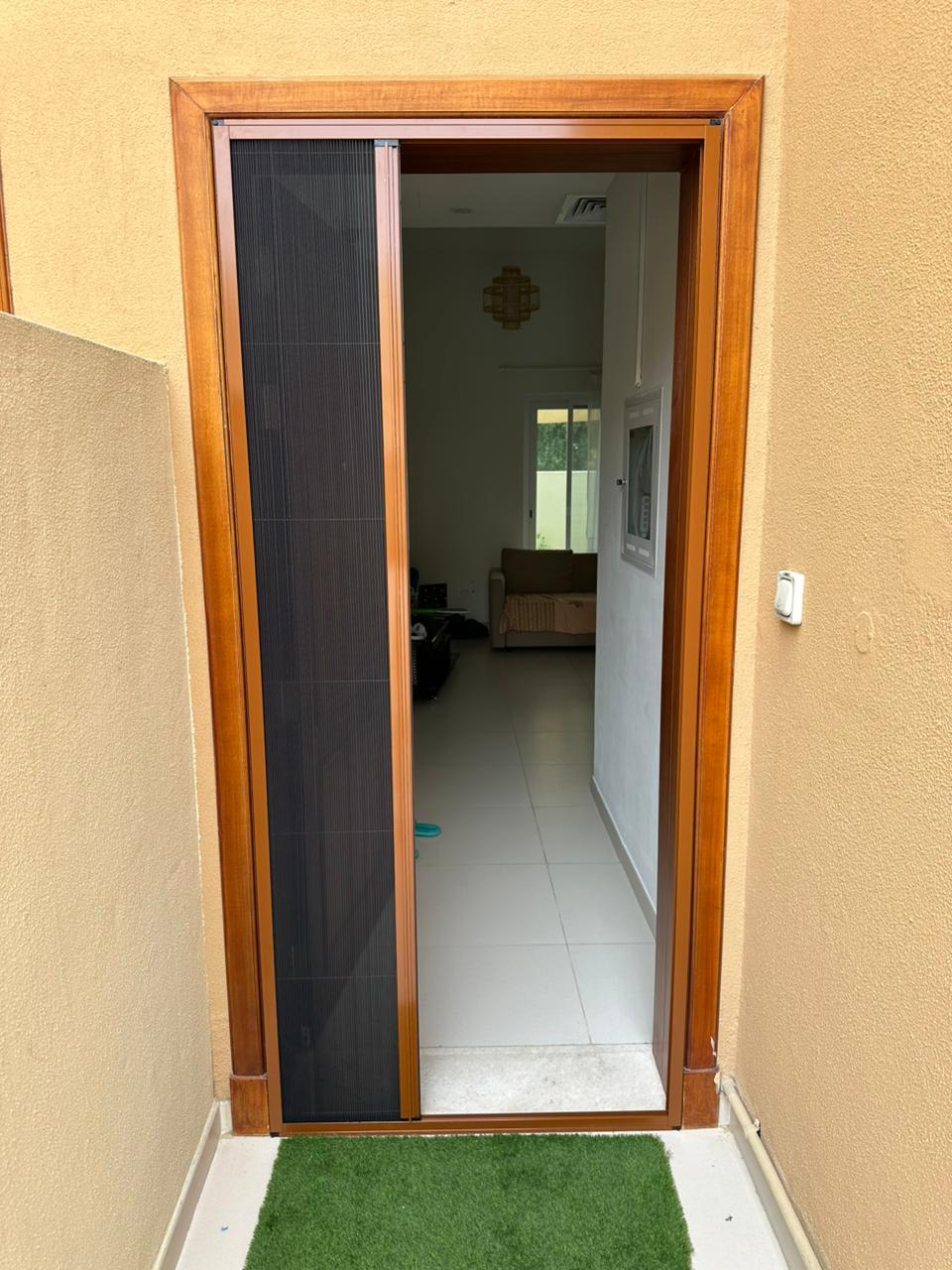
Either a mesh curtain edged with magnets and fixed with hook-and-loop tape, or a proper tensioned frame screwed to the door reveal. The hook-and-loop version needs no drilling at all, which makes it the practical choice for tenants and short leases.
Choose it for: rented apartments, kitchen and service doors, garden and balcony doors that are in constant use, back-of-house doors in cafes and shops.
Skip it for: anywhere you need durability or security — it offers no resistance to anyone determined to get in.
Price: from AED 120 for a hook-and-loop curtain, AED 350 for a tensioned single-door frame, AED 600 for a double or French-door set, AED 850 for oversized doors.
More on magnetic mosquito screens
Motorized screens — for openings you cannot reach
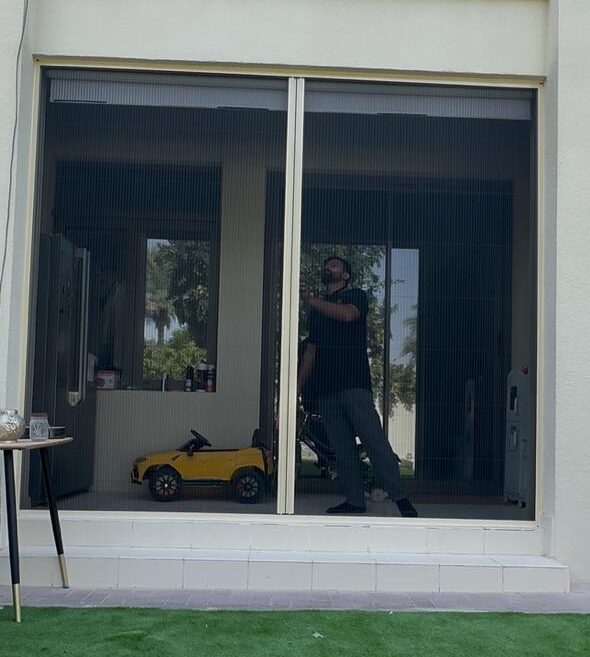
A powered cassette operated by remote, wall switch or smart-home app, with optional wind, sun and obstacle sensors. Wind sensors matter on high floors and exposed terraces, where a large mesh panel catches gusts. Power can be mains, rechargeable battery or solar, and manual override is available if the power fails.
Choose it for: double-height villa atriums, unreachable clerestory windows, oversized sliding doors, pergolas and outdoor dining areas, commercial entrances.
Skip it for: small windows within arm’s reach — the economics never work.
Price: from AED 1,800 for a compact unit, AED 3,200 for a wide patio door, AED 5,500 for a glass facade or multi-panel span, AED 7,500 for a pergola or terrace, plus around AED 600 for sensors and smart-home integration.
More on motorized mosquito screens
Plain mesh screens — the clearest view over the widest span
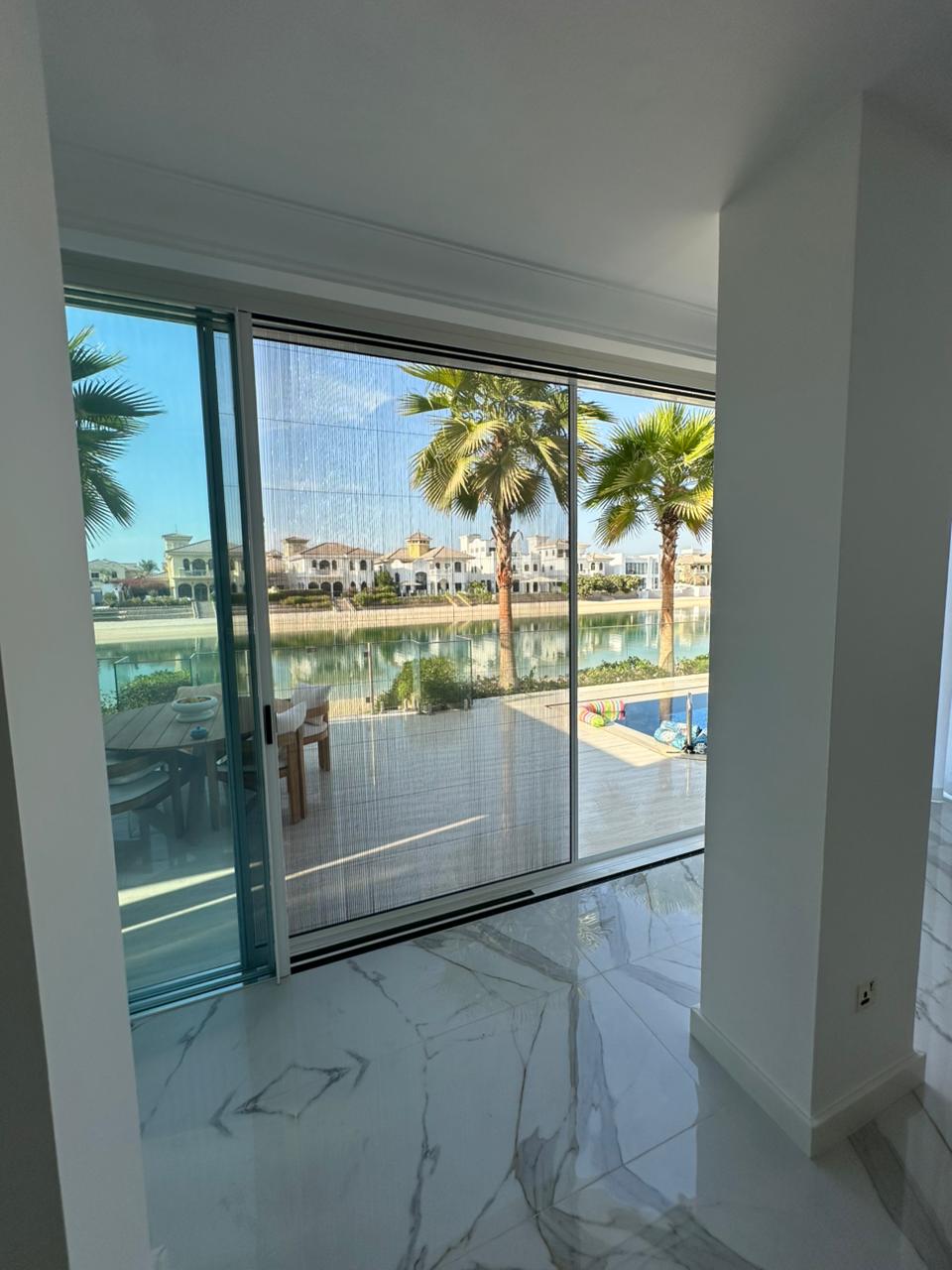
A flat mesh sheet drawn sideways by hand across top and bottom tracks, retracting into a side cassette. Because the fabric is flatter and finer than a rolled screen, the view through it is noticeably clearer — and it covers up to roughly 9 m wide and 6 m high in a single screen without a motor.
Choose it for: wide bifolds, picture windows where clarity is the priority, large balconies and verandas, villa garden rooms, restaurant terraces.
Skip it for: compact kitchen or bathroom windows.
Price: from AED 750 for a standard screen, AED 1,400 for wide patio and bifold doors, AED 2,200 for extra-wide spans, plus AED 200 for the clear-view upgrade.
More on plain mesh screens
Stainless steel security screens — insect protection that also resists intrusion
Woven 316-grade stainless mesh in a reinforced frame. It stops insects like any other screen, but it is really bought for two other reasons: resistance to forced entry on ground floors, and resistance to salt corrosion on coastal properties.
Choose it for: ground-floor villa windows and doors, coastal homes, properties where a screen also needs to be a barrier.
Price: from AED 450 per panel.
More on stainless steel security screens
Choose by opening, not by product name
The fastest way to get this right is to walk your home and label each opening by how it is used.
Sliding bedroom and living-room windows
Sliding screen panel. It matches the glass, costs little, and you can open half the window without moving anything. Fixed panels are a cheaper alternative if you always open the same side. See mosquito screens for windows.
Casement, awning, bathroom and kitchen windows
Fixed clip-in panel, every time. These openings exist for ventilation, not access. Choose the clip-in version so you can lift the panel out and rinse it.
Sliding patio and balcony doors
Sliding screen for daily use; pleated if the opening is wide or you want the screen to disappear completely when parked. Both leave the glass door working normally. See mosquito screens for doors.
Hinged, French and main entrance doors
Pleated for a permanent, good-looking solution; magnetic if you are renting or want the cheapest workable option. Sliding screens are the wrong answer here — there is no track line to follow.
Bifold doors and wide villa openings
Double-pleated up to about 6 m, plain mesh beyond that or wherever view clarity matters most, motorized if the span is very large or the head height is out of reach. See mosquito screens for villas.
Balconies and Juliet balconies
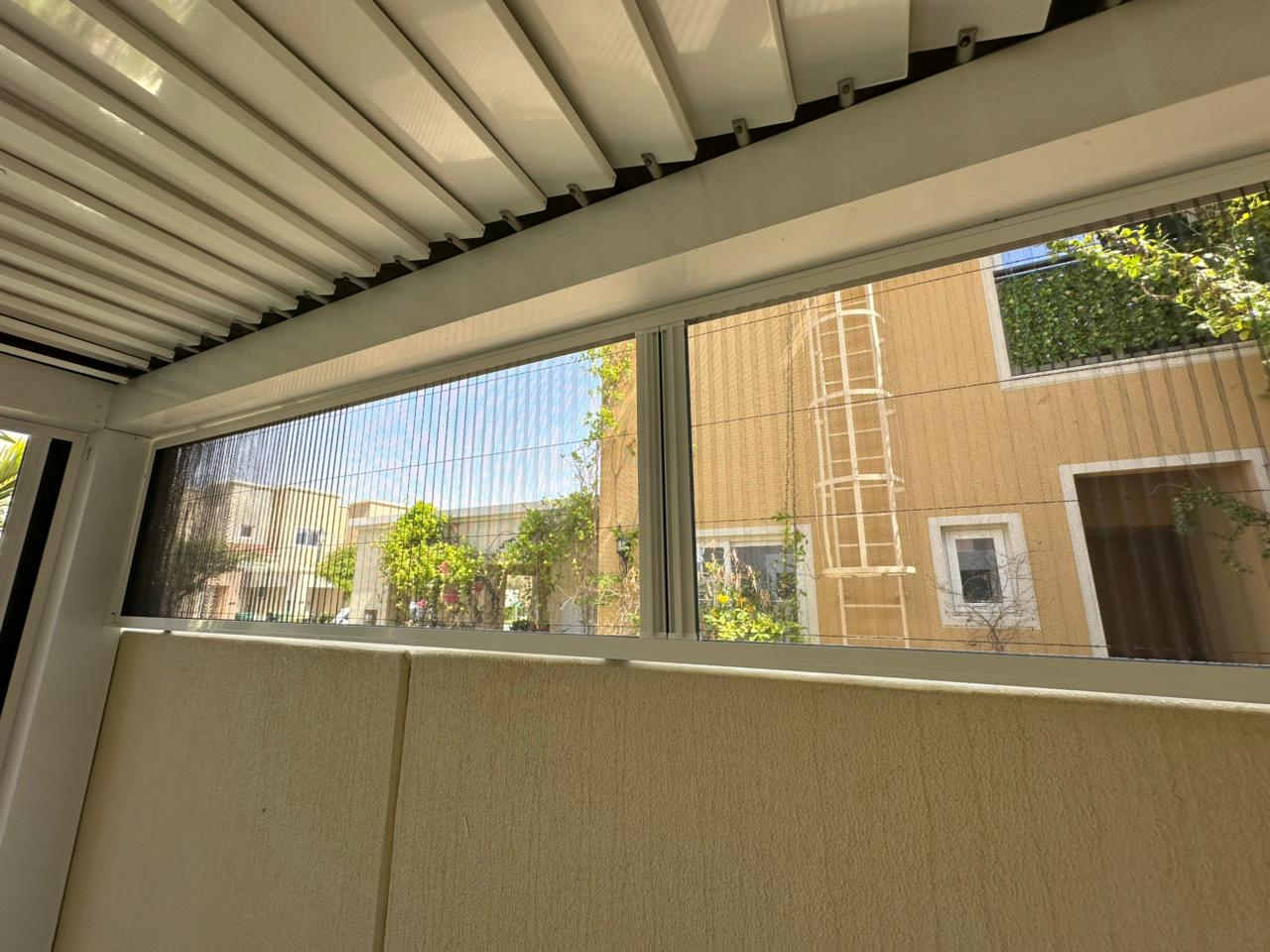
A Juliet balcony is a glazed or railed opening with no floor space, so a fixed or sliding panel is usually enough. A walk-out balcony needs a system you can pass through repeatedly: sliding, pleated or magnetic. On high floors, factor in wind — a loose curtain-style screen will flap. See mosquito screens for balconies.
Tall, high-level or unreachable openings
Motorized, or chain-operated retractable up to about 3 m. The test is simple: if you would need a ladder to close it, you will stop closing it.
Renting in Dubai? What you can fit without drilling
Most tenancy agreements allow reversible fittings and require permission for anything that alters the property. In practice that gives tenants three safe options:
- Hook-and-loop magnetic screens — adhesive strips only, removable at the end of the lease, from AED 120.
- Clip-in fixed panels — tensioned into the existing reveal without screws on many window profiles.
- Sliding panels on an existing screen track — many Dubai apartments were built with an empty screen channel already in place, which means a new panel simply drops in.
If you are in a managed tower, it is worth a short email to building management before fitting anything visible from outside — some communities specify frame colours for facade consistency. Where drilling is permitted, a screwed frame will always outlast an adhesive one.
What it costs, and where the money actually goes
Across all types, three things drive the final price far more than the brand: the size of the opening, the number of panels and the mesh upgrade. Mesh upgrades typically add AED 50–200 per panel — worth paying for fine weave if you get midges or sandflies, pet-resistant if you have cats, and marine-grade stainless if you are near the water.
A realistic apartment budget: a two-bedroom flat with four sliding windows and one balcony door usually lands somewhere between AED 1,000 and AED 1,800 fitted, using sliding panels throughout. A villa with bifolds and multiple terraces is a different order of cost, and worth surveying properly before comparing quotes.
Be cautious with quotes that are dramatically cheaper than everything else. The usual explanations are non-UV-stable mesh, thin unbranded frame extrusion, or a fit that leaves gaps at the head and sill — and a 2 mm gap is all a mosquito needs.
How each type survives dust, sun and salt
- Lowest maintenance: fixed panels. Nothing moves. Lift out and rinse twice a year.
- Needs track cleaning: sliding and pleated. Vacuum the bottom track every month or two; grit in the track is what makes a pleated screen feel gritty and a sliding panel feel heavy.
- Needs gentle handling: retractable rollers. Let the mesh return under control rather than releasing it — snapping shortens spring life.
- Shortest life: hook-and-loop magnetic curtains, particularly in full sun. Treat them as a two-to-three-year consumable rather than a permanent fitting.
- Best near the sea: marine-grade powder-coated aluminium frames and 316 stainless mesh. Standard steel fixings will bloom with rust within a season on an exposed Palm or Marina balcony.
Across every system, mesh is replaceable without replacing the frame — so a torn screen is a repair, not a rebuild.
Five mistakes worth avoiding
- Buying by product name instead of by opening. “Retractable” is not automatically better than “fixed”. It is better for a specific job.
- Measuring the glass instead of the reveal. Screens fit the opening, not the pane. A free on-site measurement removes the risk entirely.
- Ignoring the gaps. A perfectly good screen with an unsealed head or sill gap performs like no screen at all. Brush seals matter.
- Fitting a delicate system on a high-traffic door. The kitchen door that opens forty times a day should get the toughest system you can afford, not the prettiest.
- Choosing the finest mesh everywhere. Finer weaves cut airflow. Use fine mesh where midges are a real problem and standard mesh elsewhere — the mesh guide covers the trade-off room by room.
Frequently asked questions
What is the difference between a mosquito net and a fly screen?
None, in UAE usage — both describe a mesh screen fitted to a window or door. The real difference is between the frame system and the mesh weave, which are chosen separately.
Which mosquito screen type is best for an apartment in Dubai?
Sliding panels for the windows and a sliding or pleated screen on the balcony door. Most Dubai apartments have sliding glazing, and a matching sliding screen is the cheapest system that stays out of the way.
Which type is best for a villa?
A mix. Fixed panels on the bathroom and kitchen windows, sliding on the bedroom windows, pleated or plain mesh on the bifolds and terrace doors, and stainless steel on ground-floor openings where security is a concern.
Do mosquitoes reach high floors in Dubai towers?
Yes. Mosquitoes are carried upward by wind and lifts and will enter open balcony doors on high floors, so a screen is worth fitting regardless of level. Exposure is generally lower higher up, but it is not zero.
How much does a mosquito screen cost in Dubai?
Small fixed panels start around AED 120 and sliding window panels around AED 200. Door systems generally start between AED 350 and AED 650 depending on type, and motorized systems for large spans start around AED 1,800. Final pricing depends on size, panel count and mesh.
Can I fit mosquito screens in a rented apartment?
Yes. Hook-and-loop magnetic screens and clip-in fixed panels need no drilling, and many apartments already have an empty screen track that accepts a sliding panel. Check with building management before fitting anything visible from the facade.
Does a finer mesh keep out more insects?
It keeps out smaller ones — sandflies, midges and no-see-ums pass through standard weaves. The trade-off is reduced airflow, so fine mesh is best used selectively rather than everywhere.
How long do mosquito screens last in the UAE climate?
A properly specified aluminium-framed screen with UV-stable mesh should last many years, and the mesh can be replaced independently when it eventually goes. Adhesive-mounted curtain screens in direct sun are the shortest-lived option by a wide margin.
Which screen type is best for a door used every day?
A sliding or pleated system. Both are built for repeated operation. Retractable rollers and magnetic curtains are better suited to doors used occasionally.
Can screens be fitted to bifold or very wide openings?
Yes. Double-pleated systems cover up to about 6 m, plain mesh reaches around 9 m wide and 6 m high manually, and motorized systems handle spans beyond that or heights out of reach.
Getting it right the first time
Every home ends up with a mix. The apartment that only needs sliding panels is as common as the villa that needs four different systems, and the only way to know which you have is to walk the openings one by one.
We measure free of charge across Dubai, Abu Dhabi, Sharjah and the wider UAE, manufacture in our own Al Qusais workshop and fit with our own team. If you would like a recommendation per opening rather than a single blanket quote, get in touch for a free survey — or look through recent installations to see how each system looks in a real home.