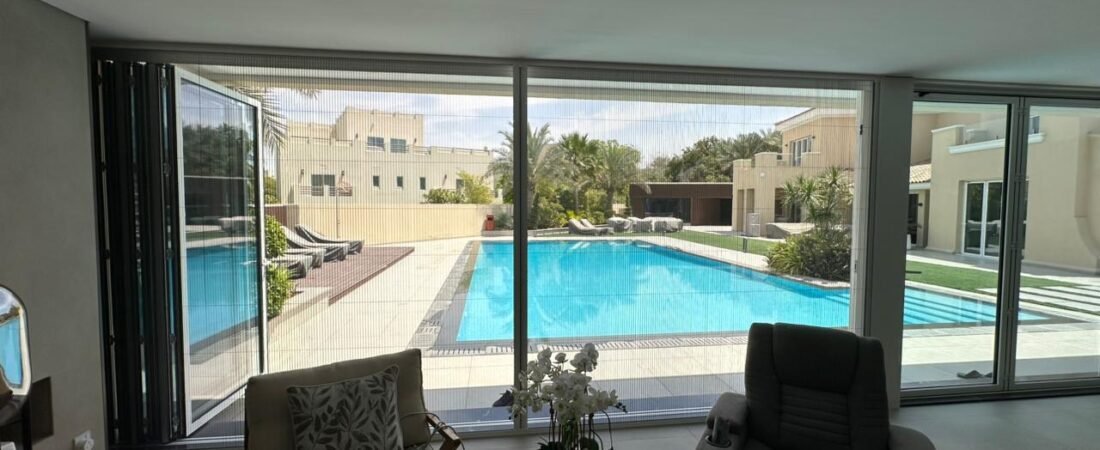
It is the complaint we hear more than any other, usually in a slightly outraged tone: “I am on the thirtieth floor. How is there a mosquito in my bedroom?”
The assumption behind the question is that height is a defence. It is, a bit. It is nowhere near the defence people think it is, and in a Dubai tower most of the mosquitoes biting you at night never flew up at all. The building delivered them.
We fit insect screens across Dubai, Abu Dhabi and Sharjah, which means we spend a lot of time standing in apartments working out where something is getting in. There are seven realistic routes. Six of them have nothing to do with how well a mosquito can fly.
- 21The highest floor Aedes mosquitoes were trapped on in high-rise research
- 7Realistic routes into a Dubai apartment
- 3Of those routes cost nothing at all to close
The seven routes
First, the uncomfortable finding: height barely protects you
This has been measured properly, in cities built like Dubai.
A 2020 study of high-rise residences in Malaysia set egg traps floor by floor and found Aedes mosquitoes up to level 21, roughly 61 to 63 metres above ground. Infestation was heaviest in the first three levels and fell as the buildings got taller, with a negative correlation between floor number and trap index at eight of the nine sites. Aedes aegypti was the dominant species throughout.
A separate study in Colombo, Sri Lanka, traced the same thing up multi-storey blocks and found eggs and larvae from the ground floor to the highest floor sampled, about 130 feet, with a peak around the sixth floor. The authors concluded that these mosquitoes “are able to breed at any level of the buildings and not restricted by their height”, and that wind speed and proximity to the coast measurably changed how they were distributed up the façade.
So the honest summary is this: a high floor reduces your mosquito problem. It does not remove it. And “reduces” is doing less work than you would like in a coastal, humid, heavily irrigated city.
Most of them did not fly up. Three things carry them
A house mosquito is a weak flier that generally stays low and rarely travels far from the water it hatched in. Getting to the twenty-eighth floor under its own power is not a normal thing for it to do. It does not have to.
Rising air inside the building
A tower is a chimney. Lift shafts, fire stairs and service risers run the full height of the building and move air upward continuously, driven by the temperature difference between a cooled interior and 45 °C outside. Anything light enough to be suspended in that air goes with it. An insect weighing a few milligrams qualifies.
Wind and the heat-island updraft outside it
Outside, the façade does something similar. Warm air rising off podium decks, car park roofs and roads produces updrafts that lift insects far past the altitude they could reach by flying. This is well documented in general: mosquitoes have been recovered from the air at heights no mosquito could ever fly to, carried there by moving air rather than by effort. A twelve-storey rise on a thermal is trivially within that.
You, and everyone else in the lift
The least glamorous mechanism and probably the most common one. A mosquito resting in a lift lobby, on a bag, on clothing or inside a delivery box rides up with whoever is going home. Lifts in a Dubai residential tower run a few hundred times a day. It does not need to work often to matter.
The 7 ways they actually get in
1The lift shaft and the fire stairs
The two continuous vertical voids in your building, both connected to the basement at the bottom and to your lobby at the top. Fire stairs in particular are rarely air-conditioned, often have a door propped open somewhere for ventilation, and connect directly to the car park.
What you can do: nothing structural, this one belongs to building management. What you can do is treat your own front door as the real boundary, because it is.
2The basement, pump room and tank room, where the building breeds its own
This is the one almost nobody considers, and it is the reason some towers have a mosquito problem in January.
A study of apartment blocks in Odessa found mosquitoes living in the halls and sub-basements of high-rise buildings, concentrated in blocks with flooded cellars, breeding year round because an underground space never gets cold enough to stop them. Numbers declined steadily from the first floor to the fifth. The researchers also noted the insects spreading from buildings with wet basements into neighbouring dry ones.
Elsewhere in the world an entire form of mosquito has specialised to this habitat. Culex pipiens form molestus, the one famous for colonising the London Underground, breeds in subway tunnels, sewers and buried water tanks, can lay its first batch of eggs without a blood meal at all, never hibernates, and bites people readily.
We are not claiming molestus is in your Dubai basement; that has not been established here. The point is the habitat. A basement car park with a leaking pump seal, a wet tank room, a blocked drainage sump or a chronically damp lift pit is exactly the warm, still, nutrient-rich water that Culex quinquefasciatus, the UAE’s ordinary house mosquito, prefers above all else. If that water exists under your building, your building is not being invaded. It is producing them.
What you can do: report it. A tower that breeds its own mosquitoes will keep handing them to every flat above, and no amount of spraying in your apartment touches the source.
3Your AC condensate tray and drain line
Dubai Municipality names this one explicitly in its own public guidance, listing “water accumulations from air conditioners” alongside leaking taps, plant watering systems and water coolers as breeding sites residents should deal with.
Think about what a split unit or an FCU actually does in a Dubai summer. It pulls litres of water out of humid air every day and sends it down a condensate line. If that line is partly blocked, or the tray sits slightly off level, or the drain terminates in a stagnant gully on your balcony, you have a warm puddle that is topped up automatically, every day, for six months. It is the most reliable mosquito nursery in the building, and it is usually a metre from a bedroom window.
What you can do: look at the tray and the drain outlet. If there is standing water, that is a maintenance call, not a pest call. This is the single highest-value thing most apartment residents can check, and it is free.
4Floor drains, gully traps and the drainage stack
Every wet area in your flat has a floor drain, and every floor drain relies on a water seal in its trap to stop the drainage stack venting into your room. That seal evaporates. In a guest bathroom nobody uses, in a Dubai summer, it can evaporate in a couple of weeks, and once it does the drain is an open pipe connecting your bathroom to a warm, wet, continuous vertical shaft that runs the whole height of the building.
Dubai Municipality’s advice includes tightly closing water tanks and sewage drain covers for exactly this reason.
What you can do: pour a jug of water down every floor drain you do not use, once a month. It refills the trap and closes the route. If a drain still smells or still produces insects, fit a drain cover with a seal.
5The balcony: planters, saucers and the balcony drain
Balconies are where the two problems meet. They hold small containers of clean standing water, which is precisely what Aedes wants, and they are the opening you leave fully open all evening in winter.
Pot saucers, decorative pots without drainage, a bucket, a folded cover holding rainwater, and the balcony’s own drain outlet if it is partly blocked. Each one is a container. The Malaysian study’s finding that Aedes aegypti was present up to level 21 only makes sense if there is water up there to breed in, and on a residential tower the water up there is on balconies.
What you can do: tip out every saucer once a month, and if you use the balcony in the evenings, screen the opening rather than fighting it. Balcony screens and retractable systems that pull away when you want the space fully open are what this opening is for.
6Windows: open, unscreened, or screened badly
From November to March, every window in the building is open. That is the whole season in one sentence, and it is why complaints peak in the pleasant months rather than in July.
Worth noting that Dubai Municipality’s own list of resident actions includes inspecting window screens for damage. The authority is not telling people to buy screens as an upsell; it lists them because exclusion is the control measure that does not wear off.
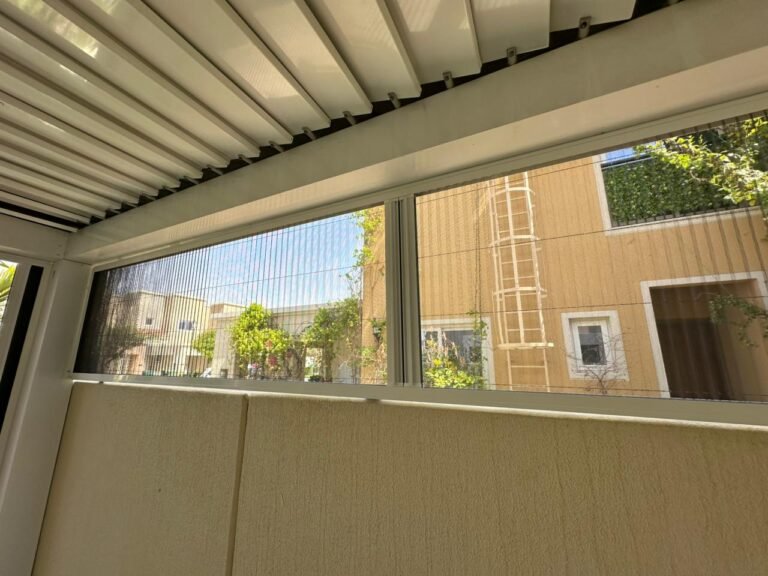
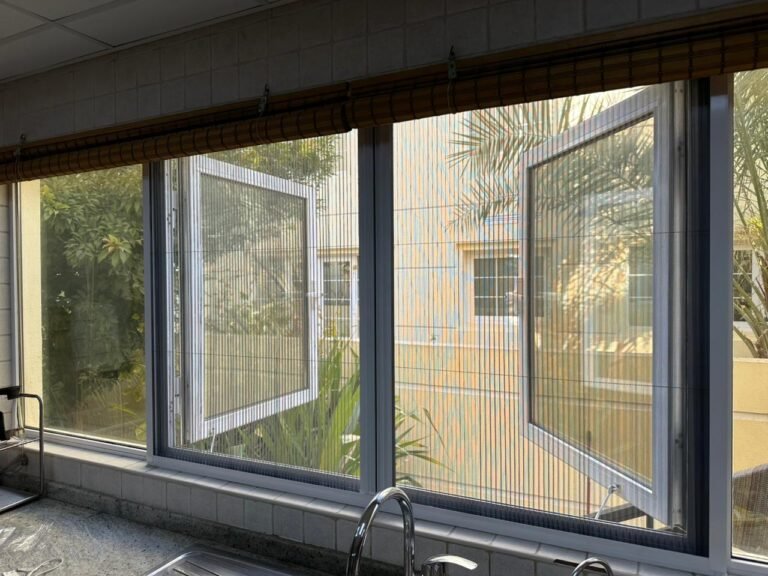
The failures we actually find on site are rarely the mesh itself. They are a 4 mm gap at the frame edge, a screen fitted to the wrong leaf of a casement so it opens past the mesh, a torn corner nobody replaced, or a sliding screen that no longer meets its jamb because the track has dropped.
What you can do: close the opening properly. Window screens in the right system for your window type, and if you are in a rental where you cannot drill, that constraint changes which system fits, not whether one does.
7Doors: the ten-second gap
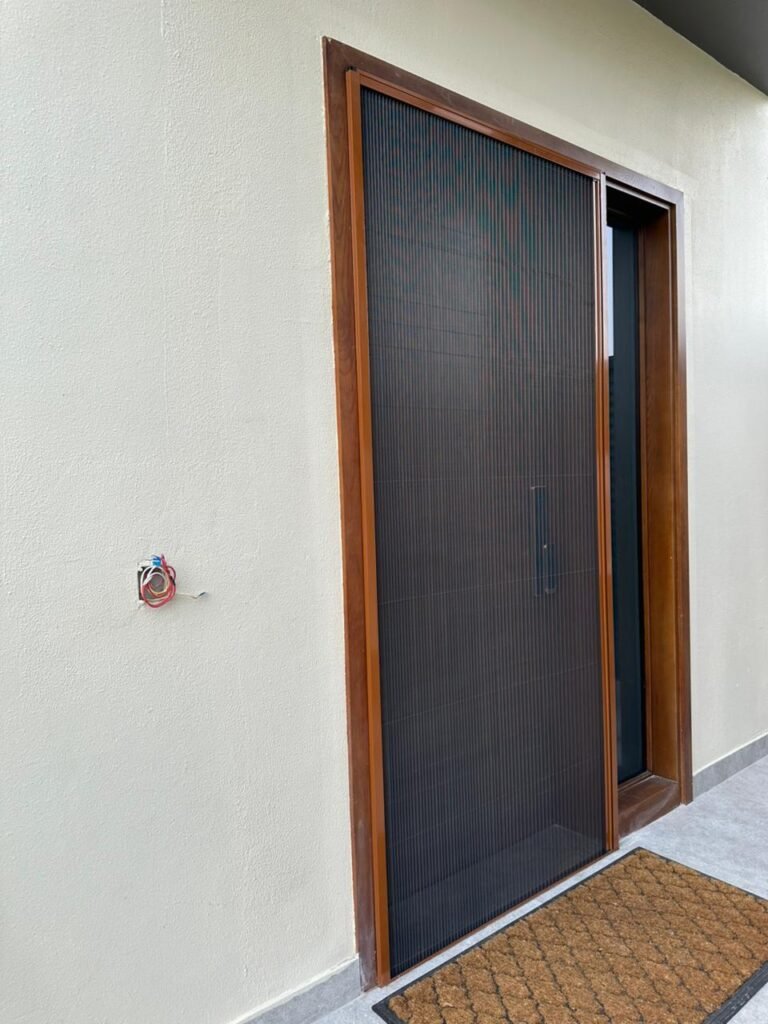
Your front door opens onto the lobby, which connects to the lift shaft, which connects to the basement. Your balcony slider opens onto the one surface in the flat that holds water. Both get propped open, and a house mosquito needs a few seconds.
Doors are the hardest opening to screen well, because a door screen that does not close itself every single time is decorative. What you can do: door screens that self-close, or magnetic screens where you need something that shuts behind you with your hands full.
Which of the seven is yours? Work backwards from the symptom
| What you are seeing | Most likely route | First thing to do |
|---|---|---|
| Bites at night, bedroom, window was open | Window (6) | Screen that window before anything else |
| Bites in winter, windows shut, mid-floor flat | Basement or stack (2, 4) | Refill floor-drain traps; report standing water downstairs |
| Only ever after you have used the balcony | Balcony door (5, 7) | Tip out saucers; screen the balcony opening |
| High floor, few mosquitoes but persistent | Lift and front door (1, 7) | Self-closing door screen |
| Guest bathroom, insects around the drain | Dry floor-drain trap (4) | A jug of water down the drain, monthly |
| Worst near the AC or on the balcony by the unit | Condensate water (3) | Check the tray and drain line for standing water |
| Whole building complains, every floor | Shared source (2) | Building management, then the municipality |
What to fix first, in order
- Your AC condensate tray and drain. Free, takes two minutes, and removes a nursery that refills itself daily.
- Every floor drain you do not use. A jug of water, monthly. Free.
- Every container on the balcony. Saucers, buckets, covers, the drain outlet. Free.
- The one opening you actually leave open. Usually a bedroom window or the balcony slider. This is where a screen earns its money.
- The front door, if you are high up and the bites are occasional rather than nightly.
- Report the basement if the whole building is complaining. Nothing you do in your flat fixes a shared source.
Notice that the first three are free and the fourth is the only one that costs anything.
Anyone who sells you a screen before asking about your condensate tray is selling, not diagnosing.
The parts that are not yours to fix
Basements, risers, lift pits, podium landscaping and the drainage stack belong to the building. If the source is down there, the escalation path is:
- Building management or the owners association first. Ask specifically whether there is standing water in the car park, pump room, tank room or lift pit. Be that specific; “there are mosquitoes” gets a fogging visit, which does nothing to a breeding site.
- Dubai Municipality takes pest reports on WhatsApp 800900 and through its app.
- The Ministry of Climate Change and Environment takes reports of stagnant water and high mosquito activity on 8003050.
Why a screen is the only layer that does not wear off
Source control works but is never complete, because you do not control the basement, the podium or the building next door. Sprays and plug-ins work until they do not: pyrethroid resistance is already measurable in UAE Culex populations, which we covered in our field guide to the mosquito species that live in the UAE.
A mesh does not care. It does not become less effective over time, it does not depend on a chemical the insect can evolve around, and it works on all four of the species you will meet here, because all of them are far too large to pass a standard insect weave. If you want the detail on apertures and what the trade-off between airflow and visibility actually is, that is in our guide to mosquito mesh types. If you are not sure which system suits your openings, we compare all eight in which mosquito screen type to choose in Dubai.
Frequently asked questions
Can mosquitoes really fly to the 30th floor?
Under their own power, almost never. Carried by rising air in a lift shaft or stair core, or riding up with a person, routinely. Trapping studies in Malaysian high-rises found Aedes up to level 21, and a Sri Lankan study found them at every level it sampled. Density does fall with height, so a high floor genuinely helps, but it is not a barrier.
Why do I get mosquitoes in winter, with the windows shut?
That pattern points inside the building rather than outside it. Underground spaces stay warm and wet all year, so a flooded basement, a leaking pump room or a damp lift pit breeds continuously while the weather outside does nothing. Dry floor-drain traps are the other common winter route.
Do mosquitoes come through the air conditioning?
Not usually through the ducts. They come from the water the AC produces. Dubai Municipality lists water accumulating from air conditioners as a breeding site to remove, and a blocked condensate tray a metre outside a bedroom window is a far more common cause than anything inside the ductwork.
Can they come up through the drains?
Yes, when the water seal in a floor-drain trap has evaporated. Unused guest bathrooms are the usual culprit in Dubai, where a trap can dry out in a fortnight. Pouring water down every unused drain once a month closes it.
I am on a high floor. Do I actually need screens?
Fewer mosquitoes reach you, so you may need fewer openings screened rather than none. In practice most high-floor apartments need the one or two openings that stay open in the evenings covered, and nothing else. That is a much smaller job than screening a villa.
How do I know which mosquito is biting me?
Work from when and where it happened rather than trying to look at the insect. Indoors at night is almost always the house mosquito; outdoors at dusk near the coast is the salt-marsh one. We set all of this out in our guide to the mosquito species that live in the UAE.
The short version
Height helps and does not save you. Most mosquitoes in a tower arrive by lift shaft, stair core, rising air or on a person, and a meaningful share of them were born in the building’s own basement or on your own balcony. Three of the seven routes cost nothing to close. The rest come down to the two or three openings you actually use.
We measure and fit across Dubai, Abu Dhabi, Sharjah and the northern emirates, and the measurement is free. See where we cover or book a free measurement and we will tell you which openings actually need doing, including when the answer is fewer than you expected.
Sources
- Vertical Infestation Profile of Aedes in Selected Urban High-Rise Residences in Malaysia, Tropical Medicine and Infectious Disease, 2020.
- Oviposition and Vertical Dispersal of Aedes Mosquitoes in Multiple Storey Buildings in Colombo District, Sri Lanka, University of Sri Jayewardenepura.
- Dynamics of number and daily activity of mosquitoes in high-rise buildings of Odessa city, Visnyk of Dnipropetrovsk University: Biology, Ecology.
- Bloodsuckers in the basement: the subterranean mosquito Culex pipiens form molestus, Bug of the Week, University of Maryland.
- Dubai Municipality: top tips to combat mosquito proliferation after rainfall, Gulf News.
- Dengue and severe dengue, World Health Organization.